Sylvia Fear of Landing
You are browsing category: Miscellaneous
23 March 2008

Update from Abroad

Birling Gap Hotel

Just a quick update to say we had a wonderful time at Birling Gap - my mother and my son both loved it, much to my relief.

The weather was IFR (in fact, we arrived a day later than initially planned to wait out a storm) but the South Downs still look beautiful in rain and mist - maybe even more so than in the sunshine.

Heide and Connor

We walked and ate and talked and walked some more - a great way to getaway. I can heartily recommend both the Thatched Bar at Birling Gap and the Beachy Head pub at, er, Beachy Head. Every meal we had was excellent, although I admit that coming in from the cold is an excellent spice for any meal. I’ve uploaded my favourite photographs of the weekend for you to see some of the sights.

We’re on the Isle of Mull now, at Ardachy House with its stunning views of Ardanalish Bay. Yesterday Connor and I walked 6km (he returned back to fling himself face down on the bed and swore never to move again) and I couldn’t stop saying “Isn’t this a pretty spot!” despite the obvious evidence that every step on the island led us to yet another pretty spot.

There was some last minute scurrying around to try to open Glenforsa airfield in time for us to fly in but the ground was a bit too damp. We used Oban airfield instead which has recently undergone renovations and has a new 1264m runway. It is a great airfield, easy to spot from miles away and as soon as we’d taxied off the runway, there were people coming out to help us unload the plane and organise a taxi. Very helpful and friendly. It was a quick trip from the airfield to the ferry where we sat in the bar and watched the mainland recede and the island come into view. A very comfortable trip, despite nasty 30 knot headwinds all the way in.

3 March 2008

Crosswind Landing?

Jesus, look at the rocking of that plane, my stomach churns just watching the video. This was apparently shot yesterday in Hamburg. The pilot did the right thing, he went around. The person filming is commenting (in German) that the plane almost crashed. Watch at 0:42 and you can see a puff of smoke as the left wing touches the ground. That was incredibly close to being a disaster.

Edit: Airliners has a stunning photograph by Lars Tretau which shows the moment when the wing tip touched.

Also, there’s a brief write-up in English on Flight Global.

1 March 2008

Flying Around the Web

I’ve started a new feature! A somewhat eclectic but hopefully always interesting collection of blog posts, photos and news stories to do with aviation which I’ve found on the web. I’ve noticed a lot of my posts are pointers to other sites and I thought it would make sense to combine them into a single post. Let me know if you think there’s something interesting I missed.

This description of a crisis on a test flight sure made me sit up straight:

Then the SR-71 literally disintegrated around us. From that point, I was just along for the ride. And my next recollection was a hazy thought that I was having a bad dream.

There’s no question, he’s lucky to be alive. I don’t think I’d ever fly again.

Of course, as pilots we do all we can do give luck a helping hand. I sit back and think of England is a interesting post about passenger reaction to safety routines:

I can understand why passengers would be taken aback to learn that the pilot is thinking about such a thing. They were thinking about how funny cows look from on top, or about how a lot more people have swimming pools than they expected. I can see them being frightened by the reminder that the engine could quit.

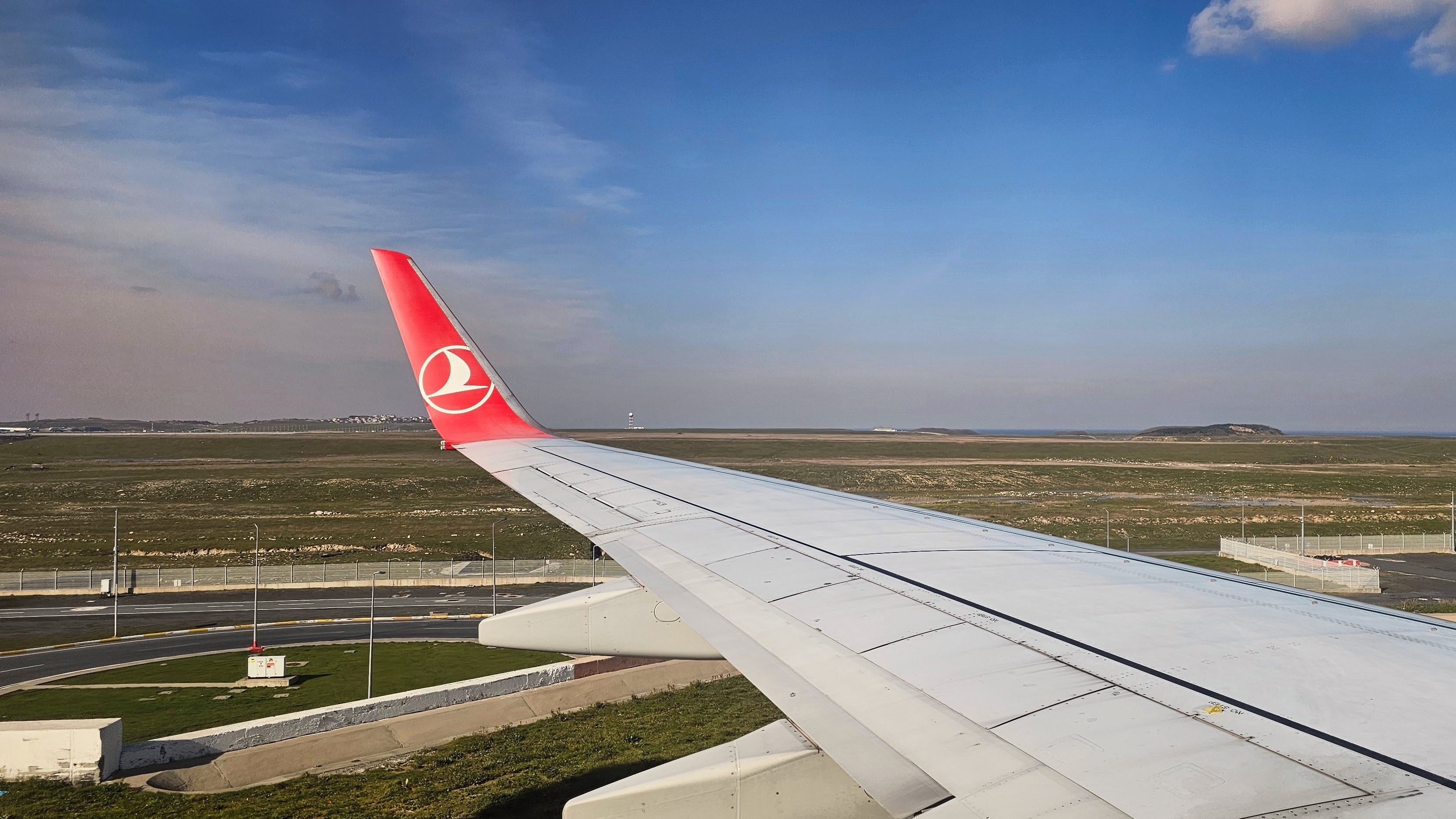
Flightblog.aero has a stunning photograph with a title which says it all: I always feel compelled to snap a photo of the wing … every flight, every time. I’m glad it’s not just me. And well, wow, what a shot.

While we’re looking at pictures, take a look at this fun selection of travel photographs, including this classic one showing why you should always learn the local language.

And finally, the latest fuss in the commercial aviation world is centered around Southwest Airlines again (the airline that rejected a passenger for having her skirt too short). Two teenagers claimed the airline was “just discriminating against because we were young decent-looking girls” after they were escorted off the plane by security. The news report quickly hit YouTube and discussion has been heated. with Gadling straight out accusing them of being spoiled brats. Southwest clearly learned from the earlier incident and decided to set the record straight immediately - on YouTube, an interesting decision considering the amount of viral attention the scandal was getting.

18 February 2008

Enter the Cockpit

This is very cool. A 360 degree view of the A380 flight deck that allows you to swivel the camera around. I’ve only seen this sort of view of hotel rooms before - where it always struck me as a bit wasted. There’s the sofa, there’s the bed - the 360 view doesn’t really offer any more information than a normal snapshot. This is a much better use of it - I pitched around that cockpit until I started feeling seasick.

I’m kind of curious as to what that laptop looking thingie at the back is.

11 February 2008

£50 Cake

It’s disappointing. I had this great idea of flying to various little airfields and compiling a list of the best cakes in southern England. Enstone usually has slices of home-made carrot cake on the counter (next to a tin where you drop in your coins) and North Weald have a coffee shop with the cake-of-the-day out on the counter. I would discount any major restaurants or canteens and no pre-packaged goods. I wanted to go searching for all the real cakes made by little old ladies who live locally and post the list to compete with the American idea of the $100 burger. Just much more genteel: a cup of tea and a piece of homemade cake.

So here I am in England and the weather is amazing: clear blue skies, crisp horizon, chilly but not icy. Ben, who used to work as an instructor and now flies jets, is in the local area and has free time to go flying with me. Unfortunately the gyro on the plane has failed completely and although functionally the plane flies just fine, I really don’t fancy navigating by compass. It turns the wrong way and lags behind the plane, so it’s a rather bizarre feeling. I did it once as a part of my training (so that I could fly it in exactly this type of scenario) and the instructor and I both agreed it was not something anyone would want to do for fun.

Ah well, I’m supposed to be on a diet anyway.

3 February 2008

Photographing Not Flying

This is a bit of an odd one - I need photographs of “not flying” to go with an article where I complain a lot about winter weather and being grounded.

I’ve put together a collection of photographs of rain, cloud and fog:

Winter Blues

Help me out by telling me which ones you like best. If you click through on the mosaic, you will find links to the full size versions.

1 February 2008

Cambridge

I was just pondering whether I had anything to write about when I got a research question as a comment - how exciting!

Sex Scenes at Starbucks is a speculative fiction writer living in Colorado. She is working on a novel which includes a scene with a jet flying out of Cambridge. She asked me if I’d ever flown in there and what size jet could land there.

As it happens, I flew into Cambridge for the first time last November (in fact, my last flying trip - uh oh, I better watch those take-offs and landings again). Cambridge City Airport is only a few miles from the University, where I was invited for dinner. Cambridge Airport is a regional airport geared towards executive travel. They see a fair number of jets and they also have two flying schools.

Cambridge runway is 1,965 metres long, long enough for a Boeing 737 or 757 or an Airbus 320/321 under normal circumstances. They have customs and immigration services so it would make a logical exit point from the EC. They also offer a “VIP Catering and Floral Service” which I thought sounded intriguing. Marshall Executive Aviation have a Cessna Citation Bravo available for “corporate travel” which is based there. Their website includes brief descriptions of the planes, including “18 passenger jets with a trans-Atlantic range” which might be useful for your research.

There used to be regular scheduled flights from Cambridge to, among other places, Amsterdam. Suckling Airways (I’m not making this up) was a husband and wife company which operated for many years from Cambridge using 18-seat Dornier aircraft. When advertising for an air-hostess, they specified a maximum height permitted of 5′2″ (158cm) so that she could stand up in the aisle.

So there you go: more than you ever wanted to know about Cambridge Airport - but maybe it’ll inspire you ;)

23 January 2008

Now that’s what I call a cruise!

Forget the Queen Mary, I want to go cruising on one of these:

Manned Cloud

The brainchild of Jean-Marie Massaud, the Manned Cloud is an airborne hotel that he hopes will change the way we view tourism.

Manned Cloud is a hotel with a capacity of 40 passengers and staffed with 15 persons, that on a 3-day cruise in 170 km/h permits man to explore the world without a trace: to re-experience travelling, timelessness and enhance the consciousness of the beauty of the world - and to experience spectacular and exotic places without being intrusive or exploitative. For me this project sums up a way of thinking that is the stake of tomorrow.

Dezeen Design Magazine has done an excellent write-up with all the details. It sounds wonderful:

Manned Cloud will have a cruising speed of 130 km/h and a top speed of 170 km/h. Two two-deck cabin will contain amenities including a restaurant, a library, a fitness suite and a spa. There will also be a sun deck on top of the double helium-filled envelopes.

Where do I sign up?

19 January 2008

Crash-landing at Heathrow : Just the Facts, Please

There is a lot of speculation going on in the press and, worse, a lot of speculation being presented as fact. The words “Absolute nonsense!” have become a frequent sound in our household as we read the articles in the popular press. I know accident reports aren’t everyone’s thing, but in the interests of understanding what happened, here is a quick run-down , based on the initial report.

Following an uneventful flight from Beijing, China, the aircraft was established on an ILS approach to Runway 27L at London Heathrow.

Nothing out of the ordinary until the final approach: that is the plane has already done its initial descent. The stewerdesses are buckled up and the plane is coming in to land. This is the hectic bit of the flight. A pilot friend of ours jokes that he gets paid for hours of boredom with a little bit of excitement at the beginning and the end. Some of the newspaper reports seem to almost imply that planes land themselves as they bandy about terms like Instrument Landing System and auto-thrust. Planes can land themselves in certain circumstances but it’s rough, we still prefer real people to put the planes onto the ground. It really is a safe assumption that the pilots would be giving the situation their full attention.

Initially the approach progressed normally, with the Autopilot and Autothrottle engaged, until the aircraft was at a height of approximately 600 ft and 2 miles from touch down.

At 600 feet they would be forty seconds away from anticipated touchdown. Then, something went wrong.

At approximately 600 ft and 2 miles from touch down, the Autothrottle demanded an increase in thrust from the two engines but the engines did not respond.

This is the loss of power: equivalent to putting your foot down and your car not accelerating.

Following further demands for increased thrust from the Autothrottle, and subsequently the flight crew moving the throttle levers, the engines similarly failed to respond.

The pilots immediately realised there was a problem and manually pushed the levers and got the same effect: no power.

Forty seconds is not a lot of time to make decisions and the ones we are hearing about in the press seem to have been sensible. Put the auxiliary power on. Don’t mess about with changing control, let the co-pilot land. Keep the plane in the air for as long as possible. Get the damn plane clear of the road.

The aircraft stopped on the very beginning of the paved surface of Runway 27L.

It seems likely that, given the time they had to make a decision, the pilots simply focused on getting that plane to the runway. They didn’t but they made it to the ground and cleared the perimeter fence: well done! There’s not a lot of options when you are in a 777 with no power, 600 feet above the ground.

The big question is: Why did the power fail? Any comment on that is complete speculation at the moment: the only information so far is why it didn’t.

A significant amount of fuel leaked from the aircraft but there was no fire.

We know for a fact that they were not out of fuel. We can probably rule out electrical fire based on the amount of fuel leaking without igniting. Interestingly, if the undercarriage had collapsed on the tarmac, there would have been a lot more sparks and very likely there would have been a fire, not that it’s likely that they aimed for the soft ground. One theory is that there was water in the fuel lines, which fits with the data we have so far. But honestly, until the plane has been examined, we just don’t know.

Initial indications from the interviews and Flight Recorder analyses show the flight and approach to have progressed normally until the aircraft was established on late finals for Runway 27L.

So interviews and the flight recorder are not showing an earlier fault in the plane. Now something went wrong, clearly. But this is why I don’t understand the press references to an alarm that apparently didn’t go off. They were 600 feet over the ground when they lost power - what good would an alarm have done?

We don’t know what caused the loss of power and the pilots didn’t have time to find out.

It seems to me that pilots did exactly the right thing: they flew the plane. It looks like they pulled the nose right up and kept that plane in the air for as long as they could. This would explain why one of the eyewitnesses describes a left bank when the plane would have been going straight in towards the runway: the wing dropped as a result of the slow speed of the plane as they tried to get it to the runway.

Having lost power, they can’t gain height, they can’t gain speed. The glide-path that they were on for the runway required more thrust which they didn’t have. The fact that they cleared the perimeter fence and made it to clear ground strikes me as nothing less than amazing.

I stopped reading the press reports when I saw one paper quoting an unnamed pilot explaining (badly) how the accident happened. I feel like asking the journalist where he gets his references. There are plenty of pilots out there posting sensible theories as to what went wrong but they aren’t keeping their identity hidden.

The next report will be made public in 30 days and I’ll make sure to post a link to it then.

8 January 2008

The South Downs

Banner - South Downs

Cliff and I had an appointment in Eastbourne, an English resort city right on the South Downs. As always, we arranged to arrive early, so that a delayed or cancelled flight wouldn’t mean chaos. We flew from Málaga to Shoreham via Bordeaux in a single day, so we ended up with plenty of time to explore the area.

Beachy HeadBeachy Head is made up of a 530 foot chalk cliff topped by gentle green hills, the highest such cliff in Britain. The name is derived from from Beuchef, Beautiful Headland, with the additional, unnecessary “Head” being added later. The chalk is an old seabed, the cliffs formed by continents colliding 50 million years ago. Ever since, the headland has been slowly crumbling back into the sea.

The location is notorious for shipwrecks and Trinity house claims that there has been a light shining down from the cliffs to guide the passing vessels since 1670. The first lighthouse was built in 1834 on Belle Tout hill which proved to be a mistake: the lighthouse was often rendered useless by the sea fog.

Beachy Head lighthouse was built at sea level, in fact actually in the sea, in 1902, which solved the problem. The Beachy Head Lighthouse has been automated and run remotely by Trinity House since 1983.

beachy-2Beachy Head is famous for another reason: it has been known since the 1600s as a suicide spot, especially at night. Partially this is no doubt based on the reputation it now holds - the British Medical Journal explains that “would-be suicides show a tendency to emulate a successful method” and falling 500 feet is almost guaranteed to be lethal. There is also a certain simplicity and immediacy to simply dropping off the edge to almost certain death (especially at night, into the darkness).

http://www.forensicmed.co.uk/beachy_head.htm has an interesting analysis of suicides and “open verdicts” for deaths at Beachy Head, with a list of factors suggesting suicide.

  • Suicide note
  • Seen jumping / pushing off
  • Behaving strangely at the cliff edge, asking for a ‘push-off’
  • Taking a taxi direct to Beachy Head from a psychiatric hospital

The inclusion of “Male >45 yrs living alone” seemed a bit judgemental in light of the other entries, I thought!

The SamaritansOver the 24 year period of the study, covering 250 deaths, only 11 were accidental, “mostly due to people catching hold of their friends/partners whilst steadying themselves at the cliff edge”. If I’d known this, I would have stood a bit further away from my companion when we were walking there.

The BBC estimated that some 20 people commit suicide at Beachy Head each year but that figure has dropped dramatically as a result of evening patrols from Beachy Head to the car park at Birling Gap: the coastguard stated that they had only seven incidents in 2006.