12 March 2010

Sky Dance

Unfortunately I am somewhat under the weather so no post today. And although I’ve got a great YouTube clip for you, I strongly suspect that I am the last person left on earth who hasn’t already seen this video.

But gorgeous views like these are worth watching more than once, isn’t it?

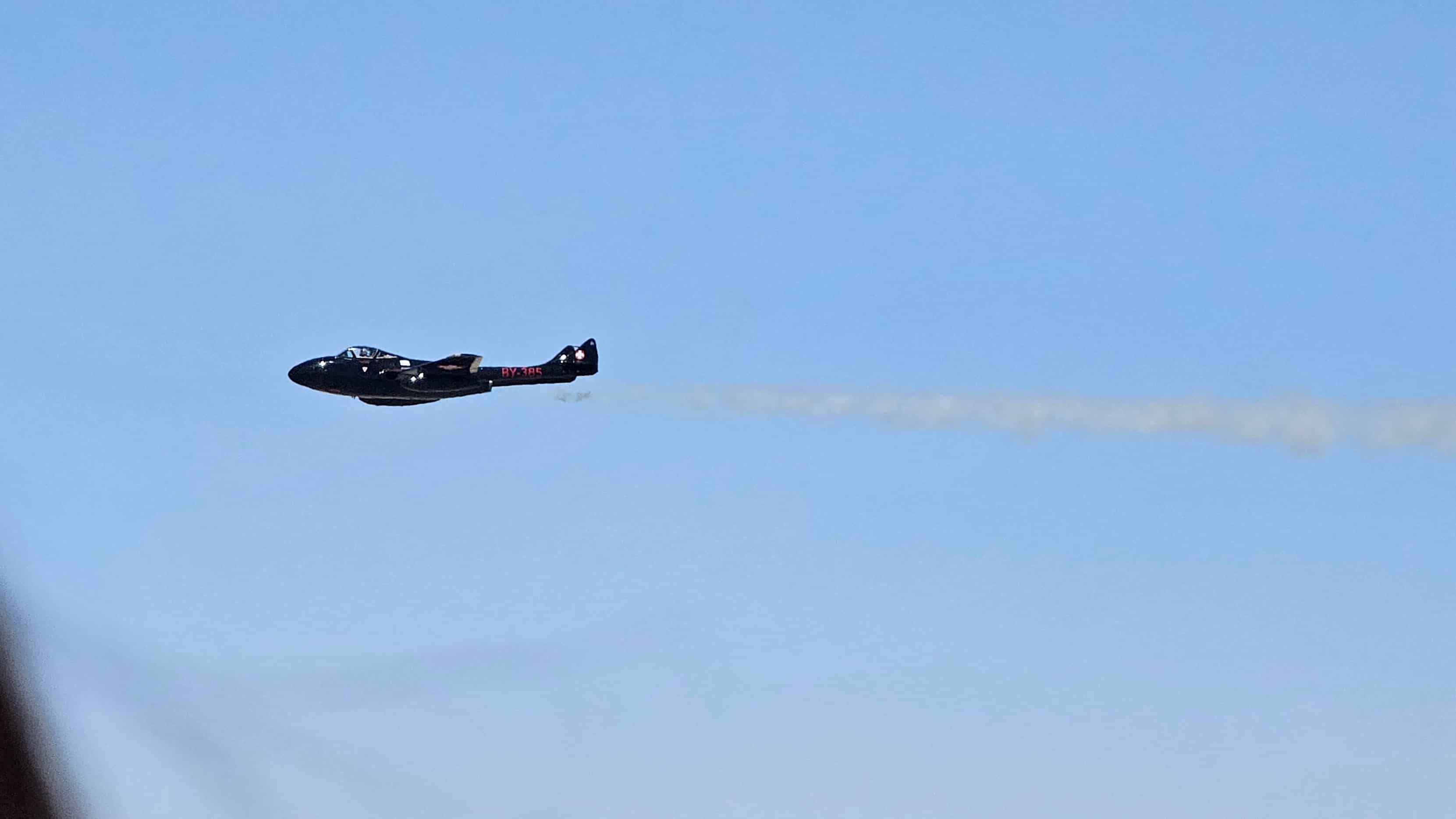
This is apparently a clip from Sky Dance, a 1980’s IMAX documentary film about aerobatic flying.

Amazon.com: Sky Dance Product Review

Ultimate G’s puts the viewer in the front seat of the Extra 300 aerobatic monoplane. You’ll feel the thrill of flying in a world-class aerobatic competition aircraft through the Grand Canyon! Pilots from the Air Combat Canada show team and world aerobatics champions engage in solo flights, dogfights, formations and aerobatic flying. Originally released in IMAX theaters, this movie is hightly recommended not only for it’s visual effects, but also its delightfully entertaining story about a young boy who dreams of becoming a pilot despite all odds.

I can’t wait to get my hands on a copy.

So, is it true? Did all of you already know about this film and neglect to tell me?

5 March 2010

Swissair Flight 111

I was talking to someone about the Northwest Flight 188 – the one where both pilots somehow managed to get so distracted that they missed their destination and did not respond for over an hour. I expressed some indignation that the FAA had revoked the licences of both pilots without waiting for the NTSB report. She wondered what difference that might make – which I found somewhat difficult to explain.

The strength of accident investigations is that it is not simply a blame-allocation exercise. 2008 NTSB statistics for scheduled flights show one accident per million flight hours, no fatalities. One of the reasons that aviation is relatively safe is because every accident is treated seriously, rather than dismissed the moment someone is found who could be held accountable.

The focus over the last few decades has been on how to avoid the same scenario or sequence of events in the future, which is critical.

A very good example of how this works is Canada’s Transportation Safety Board of the Swissair Flight 111 in 1998.

BBC News | 8 September 1998 | Flight 111’s black hole

The first that air traffic controllers heard of the problem was 16 minutes before the crash.

The pilot announced: “Swissair 111 is declaring pan pan pan – we have smoke in the cockpit.”

“Pan pan pan” is the expression used when an emergency is less acute than a mayday signal, which indicates imminent disaster. But the situation rapidly deteriorated.

The pilot suggested landing at Boston, but was told Halifax was closer, so he began heading in that direction.

However, the plane was at an altitude of around 10,000 metres and needed to lose height.

Air traffic controllers also gave the pilot permission to dump at least 30 tons of fuel to land safely to help it land safely.

The pilot’s next words on the radio were that he was declaring an emergency.

“We have to land immediately,” the pilot said, the last words the controller heard from the plane.

Radar signals showed that the airliner began flying off course in a rapidly descending loop over the sea.

Six minutes later, it hit the water.

The easy assumption was that the flight crew were remiss in not declaring an emergency immediately, wasting valuable time.

The flight crew realised there was smoke in the cockpit. They presumed it was a problem with the air conditioning. They looked up the nearest airport with appropriate mechanics and asked for a diversion. The captain went through his checklists of how to respond to smoke in the cockpit. Long story short, by the time they declared an emergency, the captain was out of his seat trying to put out a raging fire, the First Officer was desperately trying to regain control of the aircraft with all the displays failed / failing and the plane crashed into the ocean.

Again, it would be easy to blame the Captain and his first officer: why didn’t they immediately declare an emergency? Why didn’t they immediately focus on getting the plane on the ground and *then* work out where the smoke was coming from?

The investigation cost millions and the Transportation Safety Board of Canada final report wasn’t released until five years later but it identified eleven “causes and contributing factors” which basically showed that the plane itself was unsafe – the initial problem (an unsafe in-flight entertainment system) didn’t trip circuit breakers and the insulation of the plane was flammable. The immediate effects of the investigation included removing flammable insulation material from aircraft.

The investigation concluded that, even if the crew had been immediately aware of the extent of the problem, they never had enough time to save the flight. A small electrical fire lit the insulation and the fire was out of control before the plane could have ever made it to the ground, even if the crew had diverted immediately.

Many changes were made, including better electrical systems and also usage of inflammable materials in planes. However, the report also isolated a specific issue with cockpit training, specifically challenging a presumption that pilots should operate from a best-case scenario.

Pilots live by their checklists which are meant to ensure that best procedures are followed both on the ground and in the air. The flight crew are trained to carry out checks and operations in a specific order, which should be both the safest and most efficient response to the situation. The concept of a checklist has been proven effective but there were some questionable assumptions made in some checklists, especially the standard checklists for Unidentified Smoke on Board.

Most instances of smoke in the plane are benign and it is rare to have an in-flight fire. The training was focused on finding the source and eliminating the problem, rather than treating the situation as a potential serious fire threat until you’ve identified the issue. In most instances, the situation is quickly dealt with in the air but it is incredibly dangerous to presume that will be the case.

Since this accident, the discovery of smoke is treated as a potential in-flight fire (that is, an emergency) until the source is found and the problem eliminated.

The knee-jerk response was “there was an electrical fault and the pilots failed to handle the emergency” whereas the drawn-out and expensive investigation effectively proved that there was a lot more to it than that.

As a result, specific changes were recommended (and taken up) which have helped us to avoid this sequence of events in the future. These changes in themselves would not have saved Swissair Flight 111 but their impact on aviation safety for the future is inestimable.

For more information, read the full accident report: Transportation Safety Board of Canada – AVIATION REPORTS – 1998 – A98H0003

26 February 2010

Continental Flight 3407 Final Accident Report

Yesterday, the National Transportation Safety Board issued its final report on the Continental Flight 3407. On 12 February 2009, the plane lost control on approach to Buffalo, New York and crashed into a residential building, killing the crew and all of the passengers as well as a person on the ground.

You can read the full Aircraft Accident Report in PDF format.

In the hearing, the NTSB Chairman stated that the probable cause of the accident was the captain’s inappropriate response to an aerodynamic stall from which the airplane did not recover.

The report makes 25 new recommendations to the FAA and reiterates three previously issued recommendations. The NTSB’s 2010 Most Wanted List already lists two of these: Reduce Accidents and Incidents Caused by Human Fatigue in the Aviation Industry and Improve Crew Resource Management.

Executive Summary from the Report

On February 12, 2009, about 2217 eastern standard time, a Colgan Air, Inc., Bombardier DHC-8-400, N200WQ, operating as Continental Connection flight 3407, was on an instrument approach to Buffalo-Niagara International Airport, Buffalo, New York, when it crashed into a residence in Clarence Center, New York, about 5 nautical miles northeast of the airport. The 2 pilots, 2 flight attendants, and 45 passengers aboard the airplane were killed, one person on the ground was killed, and the airplane was destroyed by impact forces and a postcrash fire. The flight was operating under the provisions of 14 Code of Federal Regulations Part 121. Night visual meteorological conditions prevailed at the time of the accident.

The National Transportation Safety Board determines that the probable cause of this accident was the captain’s inappropriate response to the activation of the stick shaker, which led to an aerodynamic stall from which the airplane did not recover. Contributing to the accident were (1) the flight crew’s failure to monitor airspeed in relation to the rising position of the lowspeed cue, (2) the flight crew’s failure to adhere to sterile cockpit procedures, (3) the captain’s failure to effectively manage the flight, and (4) Colgan Air’s inadequate procedures for airspeed selection and management during approaches in icing conditions.

The safety issues discussed in this report focus on strategies to prevent flight crew monitoring failures, pilot professionalism, fatigue, remedial training, pilot training records, airspeed selection procedures, stall training, Federal Aviation Administration (FAA) oversight, flight operational quality assurance programs, use of personal portable electronic devices on the flight deck, the FAA’s use of safety alerts for operators to transmit safety-critical information, and weather information provided to pilots. Safety recommendations concerning these issues are addressed to the FAA.

Primary Issues: Fatigue and Training

Although legally the crew was within flight and duty time requirements, both the pilot and the first officer were likely fatigued.

The airport had a comfortable crew room with couches, recliners and a television but which was not considered adequate for rest before a trip. The EWR regional chief pilot stated that crewmembers were prohibited from using the crew room to sleep overnight.

Nevertheless, the Captain was seen in the crew room that evening and again at 0655 and records show that he logged into the CrewTrac system at 2151, 0310 and 0726.

The First Officer did not have accommodation either and stated to another pilot that one of the couches in the crew room “had her name on it.”

She sent a text message at 1305 stating she’d had a 6-hour nap on a recliner and felt good. Just over half an hour before take-off, however, she stated, “this is one of those times that if I felt like this when I was at home there’s no way I would have come all the way out here. … if I call in sick now I’ve got to put myself in a hotel until I feel better”.

Flight 3407’s communications with Buffalo was placed on YouTube courtesy of LiveATC.net.

The flight was uneventful (with the exception of a few recorded yawns) but as the pilots began to notice the ice forming on the windshield, they began “a discussion unrelated to their flying duties”. The full transcript of the Cockpit Voice Recorder is on the NTSB site as a PDF or you can read the final five minutes on WNYmedia.net.

14 CFR Part 121.542(a-c) states: “No flight crewmember may perform any duties during a critical phase of flight not required for the safe operation of the aircraft” where critical phases include flight operations below 10,000 feet.

At the time, Flight 3407 was descending to 4,000 feet.

The descent progressed as normal with the various duties and checklists used; however no one noticed as the airspeed dropped below safe levels.

At 2216:27.4, the CVR recorded a sound similar to the stick shaker. The CVR also recorded a sound similar to the autopilot disconnect horn, which repeated until the end of the recording. FDR data showed that, when the autopilot disengaged, the airplane was at an airspeed of 131 knots.

The plane has two stall protection systems: a stick shaker and a stick pusher. The stick shaker vibrates both control columns as “an aural and tactile warning of an impending stall.” An aircraft performance study done after the accident showed that the airplane’s airspeed was “below the minimum approach speed in icing conditions for about 8 seconds before stick shaker activation and below the lowspeed cue from the initial stick shaker activation to the end of the flight”.

FDR data also showed that, while engine power was increasing, the airplane pitched up; rolled to the left, reaching a roll angle of 45° left wing down; and then rolled to the right. As the airplane rolled to the right through wings level, the stick pusher activated (about 2216:34), and flaps 0 was selected.

The stick pusher system kicks in after the plane is already in an aerodynamic stall. It “positions the elevator to 2° nose down and provides a nose-down input to both control columns” in order to encourage the pilots to push forward on the control and regain airspeed to come out of the stall.

When the NTSB looked into stall training on the Q400, they found that there was no demonstration of the stick pusher system in the standard training syllabus at the time of the accident. One check airman stated that “most of the pilots who were shown the pusher in the simulator would try to recover by overriding the pusher”.

About 2216:37, the first officer told the captain that she had put the flaps up. FDR data confirmed that the flaps had begun to retract by 2216:38; at that time, the airplane’s airspeed was about 100 knots. FDR data also showed that the roll angle reached 105° right wing down before the airplane began to roll back to the left and the stick pusher activated a second time (about 2216:40). At the time, the airplane’s pitch angle was -1°.

About 2216:42, the CVR recorded the captain making a grunting sound. FDR data showed that the roll angle had reached about 35° left wing down before the airplane began to roll again to the right. Afterward, the first officer asked whether she should put the landing gear up, and the captain stated “gear up” and an expletive. The airplane’s pitch and roll angles had reached about 25° airplane nose down and 100° right wing down, respectively, when the airplane entered a steep descent. The stick pusher activated a third time (about 2216:50). FDR data showed that the flaps were fully retracted about 2216:52. About the same time, the CVR recorded the captain stating, “we’re down,” and a sound of a thump. The airplane impacted a single-family home (where the ground fatality occurred), and a postcrash fire ensued. The CVR recording ended about 2216:54.

The NTSB have produced an animated reconstruction of the last 2 minutes of the accident:

You can also see the video in context on the NTSB Public Hearing Update from May, 2009.

Analysis

The 68-page analysis section covers the following information:

  • the accident sequence, including the minimal effect of icing on the airplane’s performance, the flight crew’s failure to monitor airspeed in relation to the rising position of the low-speed cue, and the captain’s incorrect actions in response to the stall warning;
  • strategies to prevent flight crew monitoring failures, including explicit pilot training for monitoring and standard operating procedures that promote effective monitoring;
  • pilot professionalism, including captain leadership skills and adherence to sterile cockpit and standard operating procedures
  • fatigue, including commuting pilots’ use of company crew rooms as rest facilities and industry efforts to mitigate fatigue;
  • remedial training for poor-performing pilots, the need for detailed documentation of pilot training and checking events and retention of such records, and the information to be included in an air carrier’s assessment of a pilot applicant;
  • flight crew procedures and training to ensure that selected airspeeds are matched to the position of a ref speeds switch or similar device;

The NTSB chairman, Deborah A. P. Hersman, summarises as follows:

The final report includes 46 separate findings and a determination that the probable cause of the accident was the captain’s inappropriate response to the activation of the stick shaker, which led to an aerodynamic stall from which the airplane did not recover. Contributing to the accident were the (1) flight crew’s failure to monitor airspeed in relation to the rising position of the low-speed cue, (2) the flight crew’s failure to adhere to sterile cockpit procedures, (3) the captain’s failure to effectively manage the flight, and (4) Colgan Air’s inadequate procedures for airspeed selection and management during approaches in icing conditions. The final report also makes 25 new recommendations to the FAA and reiterates 3 previously issued recommendations. The recommendations cover a wide range of safety issues that were factors in this accident, including pilot training and fatigue.

And if you’ve made it this far, you probably should read the full Aircraft Accident Report on the NTSB website.

19 February 2010

Austin Pilot Suicide: Joe Stack

Yesterday morning, Joseph Andrew Stack flew his single-engine plane into the Echelon building in North Austin, Texas. He left Georgetown airfield and flew directly to the location – low and at full speed – before crashing into the building.

It was quickly confirmed that this was intentional, a controlled flight into a building which housed an IRS centre with almost 200 employees. The impact of the plane was described as an earthquake or an explosion. Thirteen employees were treated for injuries related to the resulting fire, with two admitted into hospital. The remains of three people have been found in the building.
Stack owned the plane, a Piper Cherokee Dakota, a single-engine, four-seater plane similar to the one pictured. The Dakota has four fuel tanks and holds 84 US gallons (318 litres) of fuel. He could have easily reached his destination with only one tank of AVgas, thus it is possible that the other three tanks could have held liquid accelerants in order to keep the fires burning.

Although Stack’s webpage has been removed, copies of his suicide manifesto which was posted to his company website that day, are available all over the Internet. At six pages, it is long and detailed – some say rambling – but makes it clear that the building he flew into was very carefully chosen.

Stack explains, in abstract terms, the issues he has had with the IRS over the years. Yahoo! News offers some detail. “According to California state records, Stack had a troubled business history, twice starting software companies in California that ultimately were suspended by the state’s tax board, one in 2000, the other in 2004. Also, his first wife filed for bankruptcy in 1999, listing a debt to the IRS of nearly $126,000.”

Certainly it is clear that Stack felt he had been treated unfairly and in his manifesto he comes to the conclusion that “violence not only is the answer, it is the only answer.”

The Manifesto Of Austin Texas Crash Pilot Joseph Andrew Stack

I saw it written once that the definition of insanity is repeating the same process over and over and expecting the outcome to suddenly be different. I am finally ready to stop this insanity. Well, Mr. Big Brother IRS man, let’s try something different; take my pound of flesh and sleep well.

Earlier that day, Stack appears to have set his house on fire. Austin paper the Statesman reports:

Neighbors said they heard a loud noise that sounded like a car crash at about 9:15 a.m. and soon saw flames coming from house.

Neighbor Elbert Hutchins said he ran to the house while calling 911 and saw flames coming out of an upstairs window. Soon he saw a woman and a girl drive up in a car.

Neighbors believe that was Stack’s wife and daughter, who is about 12 years old.

His neighbour, Chuck Watkins, filmed the flames:

Stack then went to Georgetown airfield to his plane. Many news reports have cited that he did not have a flight plan – I’m not sure why you would want to notify the FAA of your intentions to fly into a building or quite how that flight plan would look. However, it’s worth understanding that there is no reason to fly a flightplan for a local VFR flight – it would have been more surprising if he had filed one.

12160.ORG state that this recording is the final transmissions to Georgetown Tower from N2889D, in MP3 format. The pilot was cleared for take-off and then stated he was heading southbound from Georgetown. The controller approved a frequency change and the pilot signed off. There’s been no information that he spoke to Austin control after this point.

Local news station KXAN have put footage of the scene on YouTube for viewing.

The National Transportation Safety Board are expected to announce a press briefing today.

12 February 2010

The Last Flight

Max Grogan, a pilot and avid photographer, posted this story to BeechTalk.com, a wonderful community of pilots and Beechcraft enthusiasts. I was immediately entranced and contacted Max directly to thank him for this heartwarming story of the brief friendship of two men, united by a love of flying. He was kind enough to give me permission to reproduce his words and photographs so that I could share them with you. It is longer than my usual posts but worth the read, I promise.


My Friend Clayton

This is a true story. May you be so lucky as to meet a man like him.
Words and Photography by Max Grogan

Although I had never seen the man before, I knew it had to be Clayton. I could tell by his walking cane. It was a knotty, crooked and gnarly old thing. I was sure I had seen it before. It looked as if a vine had once wound itself around a young sapling which was now fashioned into a support for an ancient relic of a man. Later I would find a joyful spirit, and the enthusiasm of a much younger man lay hidden in repose within his large but frail body. Once he was a young hero, answering the call to arms and performing his duty to preserve his nation’s freedom. But this day he leaned heavily on the cane as if he would topple, helpless, into a heap of old bones and wrinkled skin without its solid support.

The pilot grapevine works quickly. Should a wing be dinged, a tire burst upon landing, or someone forgets to lower their wheels, the phones will ring. Pilots are gossips when it comes to unusual happenings at their airport.

I got the call on that beautiful post Labor Day afternoon: A plane had slid off the runway into the Tennessee River at Knoxville Downtown Island Airport. The story being relayed was that it was a beautiful and recently restored Mooney flown by a very old man.

I got the message around noon. I’m not one to go running to look at a wreck or other traumatic event, so I took no action to see the plane. I was planning to fly my plane that afternoon and decided I would look into it when I arrived. I had almost forgotten about the event by the time I drove across the bridge to our lovely airport. Upon arriving I went into the office for the usual free cup of fresh coffee. The place was buzzing with talk of the earlier incident when the plane went into the water. Now I was at the root of the grapevine. I listened as people described the event and the participants.

The stories related how an elderly gentleman, a former World War II pilot, had recently bought a newly refurbished Mooney airplane. He and his nephew decided it was a fine day for an airplane ride and off they went. Never mind that he hadn’t flown in over thirty years, or that no one had checked him out in the plane. Since he had paid cash and did not have an insurance policy with which to comply he felt he was on his own and could do as he pleased.

The Federal Aviation Administration requires a pilot to pass a physical examination and a flight review conducted by an instructor before acting as pilot in command. This pilot knew he could not pass either. But he had a burning desire to fly his own plane again. The gossip was he bought the plane and defied the regulations. He flew it. Fortunately he also took a passenger along on that fateful flight.

As I sat alone, on a picnic bench outside the airport office while finishing my coffee, an ambulance drove into the parking lot. A man in his forties, wearing hospital scrubs and carrying a small plastic bag exited the ambulance and entered the office. Shortly afterward he came outside and sat down near me. He was now carrying a strange looking walking cane as well as his package.

It occurred to me he might be one of the accident victims and I asked if that were true. With a sigh and a deep breath, he acknowledged he had, indeed, been in the plane. I asked him to tell me about it and he related the events of the crash. He paused occasionally to stare toward the runway and the hidden spot where the plane was mired in river bottom mud as if he were reliving the frightful experience. He was obviously shaken, and very concerned for his uncle who had sustained a bad bruise and serious cuts on his right leg, his only injuries thankfully. He had returned to the airport for his car and his uncle’s cane which the divers had recovered. The hospital had given him the scrubs to wear and the bag contained his wet clothing.

Clayton was his uncle, he said, and he had admired him all his life. He wanted to be like him and fly airplanes but had never had the opportunity. Uncle Clayton had lived in California since before he was born and he rarely got to see him. Over the years his uncle would talk about flying the big planes during WWII, including the biggest, the B-17. He had promised: Someday he would take him into the air.

Uncle Clayton’s wife had died only a year earlier. She had begged him to move her back to Tennessee before she died and it seemed the end was near for her. So Clayton sold their beautiful home of many years. It was very nice, and was perched on a cliff overlooking the Pacific Ocean. Unfortunately Clayton’s wife died only a few months after their return to Tennessee.

Clayton had loved his wife dearly. They were married for 67 years. He would do anything for her. After the war he had owned several small planes and had a slight accident in one of them. He gave up flying after that to please his wife. That was a huge sacrifice he made for love. Yet, he never gave up his dreams of owning and flying his own plane again.

Now, his wife was gone. So many years had passed since he was last involved in aviation. The old desire to lift into the sky and fly his own plane began to haunt him. He dreamed of flying once more. Old memories kept flooding his mind and he thought perhaps there might be one last chance to relive the days of his youth. As he mourned the loss of his beloved companion, the memories of his days performing graceful pirouettes aloft became overwhelming and he bought a plane. He was a man of significant wealth. He could afford to buy a nice airplane. He answered an ad in an aviation sales magazine and agreed on a price.

The plane was delivered to the Downtown Airport. Clayton went up with the seller for a short flight, payment was made, and the deal was completed. Once again Clayton owned a plane. It was a beauty, a Mooney, resplendent in its new finery of glistening white paint, leather upholstery and high end avionics. This Mooney was a fast, complex, high performance plane. Its forward cocked tail and low slung retractable landing gear showed promise of high speed even while sitting still on the airport ramp. Clayton wanted to fly it and take his nephew aloft but there were the license and medical currency problems.

Clayton had a valid pilot’s license, as they never expire, but he was 89 years old and in bad health. He knew he could not qualify medically so therefore could not be tested for proficiency with a required semi-annual flight review. Also disappointing for him was that none of the instructors of whom he inquired would go up with him. They feared, rightly so, he might go flying on his own with possible serious consequences.

So, unable to meet federal requirements, Clayton woefully let the fast, sleek Mooney sit on the ramp for days, then weeks, until finally a month had gone by. Clayton could resist no longer. He went to the airport and started the engine in his plane. It purred smoothly, with a low rumble and a promise of speedy high adventure. He taxied it across the ramp and down the taxiway to the end and near the runway. He ran the engine up to medium power while holding the brakes, but he resisted the temptation to go at high power down the runway and lift off into the sky. He returned to the ramp, tied the plane down and went home. Sadly unfulfilled, he returned again the next day, and the next. The routine of taxiing was repeated at higher and higher speeds but he would, each time, return and park the plane on the ramp. Then he gave in to temptation. He called his nephew and announced he was ready and they were going flying. The big day had arrived.

The nephew innocently arrived after the announcement that Uncle Clayton had been practicing and was ready for their flying adventure. Finally, the promise would be kept!

They boarded the plane and, in routine fashion, Clayton taxied the plane, performed the engine check, and off they went. Into the sky they soared. Clayton made graceful turns, climbed and dove. He performed a stall and even a spin. What a skilled pilot he was and the nephew was so excited and proud. All too soon they flew toward the airport. Clayton announced he would make a few landings. As they neared the runway he lowered the landing gear.

He flew above the runway at high speed and the nephew though it was just practice, a low pass but, suddenly, at 120 miles per hour, the plane’s wheels touched down on the runway. Uncle Clayton was attempting to land the plane! The nephew instinctively knew they were flying much too fast, but it was too late. Although the runway is 3,500 feet long there was less than a thousand feet remaining when the Mooney first touched down. Clayton closed the throttle and applied full brakes until they were locked and sliding, but the nephew knew this was not going to stop the plane in time. Down the asphalt they skidded, then across five hundred feet of grassy over-run, but still the plane was not stopped. Beyond the grassy area was the rocky rip-rap protecting the island’s banks. They bounced through the rocks and on beyond and across the sandy shore. Still with energy in reserve the Mooney skidded into the water and was propelled fifty feet from shore before it finally stopped.

Now they had been in a plane crash and the plane was sinking into thirty feet of water. The nephew hastily opened the door and crawled onto the wing. He reached back inside and tugged and pulled at his uncle until finally he too was on the wing. Just as the plane slid beneath the surface they began to swim for shore. Clayton was struggling and the nephew, a skilled swimmer, turned him onto his back and began one-handedly paddling them to shore with Clayton yelling and splashing. Fortunately a mowing crew of two men had rushed to the shore soon after they saw the plane slide into the water. The two men dove into the lake and met the nephew and helped get Clayton safely on land again. Although shaken the nephew was uninjured but Clayton was having problems with his right leg.

Soon emergency medical personnel arrived and transported both men to the nearby hospital for observation and possible treatment. A rescue team was summoned and divers went into the water and attached a cable to the tail-end tie-down ring of the fully submerged plane. An attempt was made to pull the plane ashore but the landing gear dug into the muddy bottom twenty feet from shore, halting the removal effort. The divers removed what personal items they could from the plane, including the pilot’s walking cane. They tied the cable to a small tree to keep the river’s current from sweeping it downstream toward Knoxville.

As I flew over the partially submerged Mooney later that afternoon, I reflected on the events related by the nephew and others. I was saddened by the end of the story about his long awaited adventure with his Uncle Clayton. The plane would remain there for two weeks until a salvage crew finally arrived, lifted it ashore, removed the wings and carted it away.

A few months later, on another of my frequent visits to the airport, I was looking out the office window at the planes tied down on the distant west ramp. I spotted a V-tailed Beechcraft Bonanza that I had not seen before. Since that is the type of airplane I own, my curiosity was aroused. I asked the lady on duty if that was a transient or a newly based plane at our airport. She allowed as to how it was now based at our airport and owned by a man whose first name was Clayton. I said “Surely you don’t mean the same Clayton who put the Mooney into the water!”. With a big grin, she said it was. I asked if he was flying it. She said he wasn’t, because he couldn’t get anyone to fly with him. I couldn’t believe it. He had bought another plane. His dream was still alive!

Weeks passed and the Bonanza apparently was never moved. Over time sand and grit had blown against the plane’s tires making a little ridge, a tell-tale sign of inactivity. The windscreen was hazy with a thick layer of dust. I kept checking, but there was no change and the tires were slowly losing their air.

Then, on a mid-afternoon visit to the airport office, I saw the gnarly cane again. I stood and studied the man leaning upon it for support. I recalled the other time I had seen the cane and the story I was told that fateful day.

There could be no other like it, being of such uncommon design. It was being leaned upon by an elderly gentleman engaged in conversation with another stranger. This had to be Clayton. I was excited. I really wanted to meet him. I walked over to the ancient stranger and introduced myself, announced I was a plane owner and asked if he owned a plane, while thinking I probably knew the answer. The old gentleman looked me squarely in the eye, and, while leaning upon the cane, rose to the full height allowed by his worn body. Then he took a deep breath, pointed with the cane and proudly said “Yes, I do, I own a Bonanza, the one parked on the ramp there.”.

Smiling inside, and feigning ignorance, I asked if he was flying it much. He replied that he was not, and as a matter of fact, had never flown it. He said he could not get anyone to fly with him. I announced firmly “Sir, you are looking at a man who will fly with you.”. He looked at me with a wide smile and a bright sparkle in his old grey eyes. He said “Hallelujah, I will get to fly my plane.”.

Our friendship had begun.

Clayton and I went to my hangar where I showed him my Bonanza and related a summary of my flying experience. We sat on the old tattered sofa and enjoyed the warm spring weather with the hangar door fully opened. We sat and chatted for a long while, into the late afternoon. He showed me the bandages on the unhealed leg and related the events of the Mooney crash. They were much the same as related by his nephew. He matter-of-factly said he just forgot how to slow the plane down for landing. No excuses. I liked that about him.

The better part of an hour was spent listening to Clayton talk of his days in the US Army Air Corps. I kept prodding him for more information until I had a pretty good idea of his military service. He was inducted fairly late in the war as he was employed in a job which excluded him from military service when the war started. He left the job and volunteered for the military with a firm goal of becoming a pilot. He reached his goal and received his initial pilot training in Texas. He trained in open cockpit Boeing PT-18’s (Stearmans) and advanced to instructor. He soon moved into multi-engine training and eventually became qualified in the B-17, a very large four-engine bomber. He was instructing in the B-17 when the war ended, having never left the states for combat.

Over the next few meetings with my elderly friend I was able to extract more and more fascinating information about all the planes he flew. The things he related from his two years flying in the military were of great interest and I never tired of hearing of them. He had an interesting civilian life as well. After the war he returned to his original home, Knoxville, and gained employment with a food processing company. He advanced to plant manager then accepted an offer to move to California in 1957 for a similar but much higher paying job. He got lucky with stock options and was able to retire at the very young age of fifty.

Clayton owned several single engine airplanes between 1946 and 1975. The list included planes made by Luscombe, Taylorcraft, Cessna and, his favorite, Swift. He flew all over the country as he lived in the east and later on the west coast. His wife never really liked airplanes and only flew with him a few times. Although he quit flying to please her he never lost his love of aviation and missed it greatly during the following years.

During that first meeting at my hangar we made plans to fly his plane. We agreed to meet the following day and set a time. He reached for the old cane and, using it, struggled to his feet, flashed the wide smile I’d seen before and laughingly proclaimed “Boy,oh boy, we’re gonna have fun!”.

I purposefully arrived a half hour early the next day to do a thorough pre-flight inspection of the Bonanza and to put air in the tires. It was a fine day in mid-May, cloudless, with bright sunshine and light wind. Clayton, full of exuberance, was already there ahead of me. He was sitting in the cockpit of the plane, on the pilot’s side, manipulating the controls. Clayton, by now, was ninety years old. But his attitude belied his age this day. He had the look and air of excitement of a child about to be turned loose on a playground.

I performed a very thorough inspection of the plane. It had now been sitting on the ramp for over two months without being flown. As I finished checking all parts of the plane, and satisfying myself it was in a safe flying condition, I walked in front of the left wing and spoke through the window opening. I told Clayton the plane was ready to be flown but there was one last thing: I would be occupying the left seat as I would be the chief pilot. Though I could detect slight disappointment, he nodded and said “That’s fine, I just want to get in the air.”.

We were ready. Surprisingly, the engine started very easily. It ran smoothly and oil pressure was excellent. I made sure we had good communication over the intercom and left the ramp for the run-up area at the end of the taxiway. The run-up check verified excellent engine and propeller function. I turned and told Clayton to put his feet on the rudder pedals and his hands on the wheel. I instructed him to put no pressure on the controls and the goal was for him to be able to feel the control inputs I would make.

I taxied the plane to the departure end of runway 8, applied full throttle and guided the plane down the centerline. The plane lifted off smoothly and I raised the landing gear. We were flying. When we had gained 200 feet of altitude I removed my feet and then my hands from the controls. I turned to Clayton and announced “You have the airplane, maintain this attitude and fly straight ahead. He seemed to sit straighter as he assumed control and he had a look of great concentration as he guided us through the air.

I directed Clayton’s efforts. I would give him a compass heading and an altitude and he would guide the plane in response to my requests. At first I handled all engine power settings. He flew to the northeast until we had risen to 5,500 feet as indicated on the altimeter. After having him level the plane I told him to make some ninety degree turns and to maintain a constant altitude. I gradually increased the difficulty of the maneuvers. We flew in steep turns, climbs and descents. We did figure eights and 360 degree turns. My new friend and co-pilot flew the Bonanza with skill and finesse. He was an excellent pilot and his touch on the controls was light and smooth.

After twenty minutes of maneuvering I asked what he wanted to do next and he said he just wanted to fly around and look at the beautiful countryside. So we sat and flew in silence. He would occasionally dip a wing for a better look and make a turn or two. I managed a few covert glances at my co-pilot. The look of joy and contentment on his old sagging and wrinkled face was one I shall always treasure. That look put a song in my heart that still resonates to this day whenever I think of him.

I finally said “Clayton, take us home. We need to work on your landings.”. He burst into laughter and cackled: “I’ve sure proven I need help with that, haven’t I?”. He flew us back into the vicinity of the airport and I began to advise him on power reduction inputs and speeds to fly. I told him I would re-take control of the plane once we were lined up with the runway. This I did and executed a landing, with him on the controls, lightly, feeling my movements. Then as the plane rolled down the runway there was quite a bit of vibration from the left wheel. I called it quits for the day as I thought this would require either repair or adjustment.

What a magnificent day of flying we had! We tied the plane on the ramp and went to my hangar for a soda and a de-briefing.

We sat on the old sofa and talked on and on about all the things he wanted to do and the places he wanted to visit in his plane. We talked of other things as the day wore on. He told me of his career and good fortune in business. I learned how he met his wife almost three quarters of a century earlier, and how much he had loved her for all those years. As he spoke of her, I sat in silence. I noticed that tears were making little trails across his weathered and lined face. There were no apologies for the tears, and he made no effort to wipe them away. We looked directly into each others eyes, and he knew I understood.

I fell in love that day, in love with Clayton’s ebullient spirit and a determination to continue having a zest for an exciting life. I discovered a kindness and caring for others that was admirable. Most of all he was a true gentleman whose courteous ways reminded me of my father and others of a bygone era.

I took control of the plane’s maintenance and had it inspected and serviced by my mechanic. It was two weeks before the plane was ready. I kept Clayton briefed on the progress and let him know when the work was done.

We flew again in early June, flying to Oneida, Tennessee, where we fueled the plane and practiced a couple of landings. He flew the plane for all except the last minute or so of the landings. After we parked the plane I told him I was nervous now because he was again a good pilot. I asked him to promise he would not fly the plane without me. He said “Sure thing, Boss”. He pitched me the keys to the plane. He put me in charge.

He insisted he would treat me to dinner and we went to his favorite place, a steakhouse overlooking downtown Knoxville and the Tennessee River. We sat out on the patio and enjoyed our meal in the late afternoon sunshine as gentle breezes wafted up from the river. I discovered Clayton’s fluency in Spanish as he had a short discourse with our server. I was surprised. He ate there often, he explained. He had learned earlier she was a graduate student at the university and Spanish was her major. His knowledge of Spanish was acquired while living in California. He had vacationed often in Mexico and learned the language to be able to talk to the natives. It was another interesting facet of this jewel of a man.

Clayton invited me to his home and told me to bring my wife. I jokingly said “Oh no, I can’t bring her, you will try to take her away from me.”. He replied with enthusiasm “You bet I will and I just might do it!” So we agreed on a date and my wife and I drove the twenty miles to the northeast to his lovely hill-top home where he had a view of the distant Smoky Mountains. In his den I saw a karaoke machine and asked him to sing for me. He had a deep resonant voice and sang well for a couple of minutes then asked us to join in the singing. We sang a few songs with him and had a very pleasant visit. We made plans to fly again soon.

We flew again two weeks later. Clayton was making the landings during the end of the flight as I followed on the controls. His injured leg still bothered him. It had been bruised badly in the accident and a body as old as his repairs itself slowly. But, I was impressed with his ability and would have felt comfortable with him in command in the left seat. I told him so. He thanked me for the compliment and asked if I would go on a long trip with him. I responded in the affirmative and he said he wanted to visit someone in Arizona. We went to my hangar and pored over an aviation map of the United States. We planned two fuel stops for comfort and he was very excited. I said “Captain, I’ll put you in the left seat. I’ll bring a good book and relax while you pilot us to Arizona”. He beamed a radiant smile and used his favorite exclamation: “Boy, oh boy, we’re gonna have fun!”. He wanted to go soon and we talked of possible dates, needing to work around a couple of doctors’ appointments he had on his schedule. It became time for him to go. We hugged each other as had become our custom on parting. He shuffled to his car using the old gnarly cane and drove away.

As I watched him depart, I could not have known I would never fly with him again. I got the call. The one we never want. Clayton had died. His old heart had given out, beat its last beat. He made his last flight from earth and is now flying with the angels.

I grieve for my friend Clayton. I never fly my Bonanza without thinking of him. I loved his spirit, and the tenderness and kindness he showed me. He gave me the gift of his confidence: Confidence in my ability as a pilot and the very personal things he shared with me, never saying they were not to be repeated. We understood each other. We soared together, in his plane and in our many visits on the old sofa in my hangar. We talked of the things we had loved in life and the things we hoped to do. Though only a memory now, Clayton lives on in my heart and I treasure what we shared. Every moment. Every laugh. Every tear.

He was buried on a hot day in early July.

The cane was buried with him.

Author and Photographer: Max Grogan
All Rights Reserved.

(See more of Max Grogan’s photography here)

5 February 2010

Why You Should Follow Me on Twitter

I spent last week in England, hoping to get a chance to fly the Saratoga and get current with my take-off and landings.

The one day that the plane was not available was Tuesday.

That was, of course, the only sunny day of the week. The rest of my time in England was spent watching the low clouds drift past and the rain fall in a long slow I-can-keep-this-up-forever drizzle which, by the end of the week, had shifted to snow.

When I saw the sunshine, I thought perhaps it would last a while. As I couldn’t fly, I thought I’d take advantage of the weather and explore the countryside. I took my iPhone and a raincoat and made my way outside. I sent messages to Twitter about my adventures as I went. Here’s the transcript of my no-fly day which turned out both more and less interesting than I expected.

Walking along the somewhat sodden trail of the Essex Way, I wasn’t sure where I was going.

I meandered along through a small village, sending scenes from my phone, hoping that I wouldn’t get lost.

Then I found this sign and I knew I had a purpose. I turned left at the junction and walked on, expecting to see a secret bunker just around the corner. But it didn’t appear and I found a number of junctions without sign posts. I was pretty sure I was lost.

I sent a message to Twitter that I was giving up.

I decided to walk to the next village and see if I could find a taxi. I had walked 6.5 kilometres (3 miles) in total and I couldn’t face walking straight back. I was feeling footsore and depressed when finally I found another sign at the roadside.

I’d found it!

There was a paved road curving through the fields. It looked like it might be a bit of a trek but I felt renewed at having finally found the place. It would be silly for me to turn back now.

But almost immediately, there was a new obstacle.

I posted the photograph with a plea for the Internet:

Help me out. Am I going to get shot at if I continue?

The general consensus was that I should carry on – after all, the big sign definitely said open. I had walked so far, it really seemed a shame to turn back now with nothing to show for it. I carried on.

I walked for another kilometre, past a paintball complex and through the carpark with a high tower on it that didn’t look super-secret to me.

The carpark was muddy and empty but then I saw two cars parked at the side, so I felt a bit more confident. There was a trail with signs saying This Way and then another sign on an unlocked gate saying Open!

So I continued. Finally I found it – a little farmhouse in the countryside, innocent as could be.

From a distance, it was a simple small bungalow hidden amongst the trees. Well, except for the tanks parked in the garden shed and a notice on the front steps:

“Welcome to the ex Government Regional HQ, the home of the Central Government in time of nuclear war.”

There were signs saying to come on in, take a wand, take the tour. As I walked into the building, it was clearly an unmanned entrance but everything was set up to make the instructions very clear. Take a wand and take the tour! Once you pass through this door, you MUST have a wand. Adults should take a red wand and listen to it!

I took a wand and listened to the soundtrack and walked through the door. I saw a new set of signs warning me that I was now committing myself to £6.50 entrance fee, to be paid at the exit. No credit cards. No exceptions. You are on CCTV, we know what you look like! Don’t think you can get away with it (and do you have a wand? You need a wand!)

I nervously checked my wallet to make sure I had £6.50 in change and waved at the camera.

I stared down the long concrete tunnel taking me down while I listened to the information on the wand. The bunker was built in 1952 and was meant to ensure the government’s survival in the event of a nuclear war. There were iron bunk beds pushed again the wall and radiation readers and gas masks – it truly looked like something directly out of Fallout 3. The tunnel, 120m long, led to the ground floor which was actually 80 foot below the the ground. It was as I reached this part of the tour that I began to suspect something was wrong. The initial lights and displays were on and there was a radio broadcasting METARS from main cities all over Europe. But this next section was dark. I hovered a bit, listening to the wand and looking for sensors that might put the lights on, and then I lost my nerve and ran up the stairs. My plan was to go straight to the exit and find out if there actually was someone collecting the entrance fees and watching the camera, someone who could verify that I was allowed to be there.

I found a canteen, lights on, and a sign asking people to put their money into the honesty box and leave their wands in a box on the counter. As I looked around, a young man came into the room and stared at me.

“What are you doing here?”

“I, um, I was doing the tour. But then some of the lights were off.”

“The lights,” he repeated. Then he spoke very slowly, as if speaking to a mad woman. Or to an American, which many Brits believe to be the same thing. “The lights are off because we are closed. There was a sign at the road saying that we are closed on Tuesdays.”

“Right, well, there was also a sign that said open.”

“Next to the sign that made it clear that we are closed on Tuesdays.” He raised his eyebrows in a way that said, surely I wasn’t going to argue that this was false?

“Right.” I smiled in what I hoped was a conciliatory manner. “So I’ll just, um, leave the wand with you and be on my way.”

“Yes,” he said. And just in case I hadn’t understood. “Because we are closed. It’s Tuesday.”

“Tuesday. Closed. Right.” I handed him the wand and fled.

He followed me to the exit and I updated the people watching on Twitter.

Bunker was definitely interesting. Also definitely closed. I was escorted off the premises.

I followed the path back to the main road and walked on until I found a pub, where I collapsed quietly and drank an ale called “Bitter and Twisted” until my feet stopped aching. And then I phoned Cliff and begged him to pick me up.

I sent one last message to reassure the people who had followed my adventures that I wasn’t in trouble.

And then I fell asleep.

The little bit of the bunker that I explored was fascinating and I will definitely be going back. There were also signs about a £5.00 licence to take photographs indoors, so next time I will take my Nikon with me for decent shots.

You can read more about the Kelvedon Hatch Secret Nuclear Bunker on the RGHQ 5.1 Official Website and, as of March 1st, they’ll be open every day. I’m looking forward to taking Connor to explore it – but probably not on a Tuesday. Just to be safe.

And if you want to follow my next adventure in realtime, just add me on Twitter as akaSylvia.

29 January 2010

Flying Wings Photography (Andreas Zeitler)

Andreas Zeitler is a German aviation professional who runs a website dedicated to airshows in Europe and features his photography from all around the world. I first discovered his photographs on Airliners.net and visited his website:
http://www.flying-wings.com.

I was thrilled to find a lot more photographs there as well as trip reports from his visits to Japan, Israel, Beirut and the US. Of course, he took plenty of photographs of interesting aircraft at all of these locations.

I mailed Zeitler and he kindly gave me permission to share his photography with you. I’ve added quotes from his website and links to further photographs in the set on the right of each photo:

Meeting du Centenaire

Where? Reims, BA112 – France
When? 27-28 July 2009

The Meeting du Centenaire – “Meeting of the Centennial” – was announced as a big celebration of the first airshow held at Reims in August 1909, celebrated at the location that is today the airbase BA112 of the French Air Force. Additionally to this reason it was also the last meeting at this airbase which is due to close in 2011.


La Ferté-Alais / Aerodrome de Cerny

Where? La Ferté-Alais / Aerodrome de Cerny
When? 31 May – 01 June 2009

Though the airshow season is not over yet, the event at La Ferté-Alais can surely be rated amongst the top shows of the year. This is not only due to perfect weather, but also due to a perfect mixed of some of the finest flying that you can imagine of aircraft from all eras.


Hellenic Air Force

Where? Araxos and Kalamata AFB, Greece
When? Spring 2007

Very secretive and mostly inaccessible the HAF (Hellenic Air Force / ???????? ?????????) possesses a very interesting and mixed fleet, including some of the most appealing aircraft around Europe – either way because of the uniqueness of the type or just because of their striking camouflage.


C-1 - 2 TAG special colours

Where? Japan – Kyushu and Okinawa
When? December 2008

The parachutists were a real surprise as there were being dropped out of the special coloured C-1 that we saw earlier in the static display. So we also got nice photos of this aircraft, and of course the Blue Impulse with their T-4 were performing at the end of the show.


The CAF Air to Air

Where? Midland, Texas – USA
When? 02-03 October 2004

While being at the FINA CAF Airsho (2004 report) I hade the possibility for several flights in historic aircraft, including one in a Curits C-46 Command to go on a photo mission. While up in the air, a Mitsubishi Zero, 2 P-51 Mustangs, 3 B-25 Mitchel and a Gruman US-2B Tracker joined on our wings and provided excellent photo opportunities.
Going up in the early morning gave some excellent photos, and the flight in the Gruman Tracker was also an unforgettable experience during these few days in Texas.


B-2A take-off

Where? Edwards AFB, California
When? 17 October 2009

Flight Test Nation 2009 astounded 225,000 visitors from across the world as they got the opportunity to see some of the nation’s newest aircraft along with various historical ones. Commemorating the 50th anniversary of the X-15, FTN-09 was the first Air Show hosted by Team Edwards since 2006.


If you like what you see, head on over to http://www.flying-wings.com where there are many more photographs and interesting essays to go with them.

You can also sign up to his newsletter for notifications when he updates. I’m certainly hoping to see more of his photography in 2010!

22 January 2010

Ditching in the Irish Sea

Kate Burrows was flying from Guernsey back home to the Isle of Man in her PA30, a Comanche Twin, when she noticed problems with her right engine. She shut down the engine and, as she was still some 38 miles from the Isle of Man, she decided to divert to Blackpool. A few minutes later, her left engine lost power. She contacted the distress centre and they recommended she continue to Blackpool but she realised she wasn’t going to make it.

Another pilot heard the conversation and reported it on PPRuNe.
GA Aircraft Ditching Irish Sea

Heard this unfold on D&D when overflying – Female pilot reporting double engine failure and unable to make destination at that time reported to be 18 miles away. She sound relatively calm and composed under the circumstances, reporting that she was visual with some oil rigs and would circle around them…….and “possibly land on one”!! However I am delighted that she made it, job well done – even if it wasn’t the planned outcome!

Kate Burrows signed up to the forums as ManxLadyBird and gave a first hand account of her experience:

I did indeed ditch in the Irish sea. I was about 38 miles from IOM when my right prop had a runaway, it was overspeeding in excess of 2800 rpm and I could not stabilise it. The MP was low as well so I did not have much to play with. I felt it was uncontrollable and shut it down.

The PA30 can fly perfectly well on one engine so I descended to 4000 ft to get out of the cloud layers and diverted to Blackpool. About 6 minutes into my diversion my left engine lost power. My MP was down to 17 inches. I did all the checks changed fuel tanks, cross feed, electrics, boost pumps etc. No go.

D & D wanted me to try for Blackpool 18 miles away but I would not have reached there. I was near the oil rigs so elected to land in the vicinity. I spotted the support ship and ditched near it. I got out and had to hold onto the life raft. There were no steps on the life raft and no way to pull myself in.

The oil rig helicopter was hovering nearby to spot me whilst the support vessel rescue craft picked me up. Once on the ship I was checked out and the RAF Seaking from RAF Valley winched me up and took me to Blackpool. I was checked out at the Hospital there and ok to fly home on Manx2.com’s aircraft. All the emergency services and the police were fantastic and couldn’t have been more helpful.

Lots of things were in my favour. In my training as a commercial pilot it was instilled ‘fly the aircraft’. Sort out the problem and then make a decision and stick to it. This is what I did. My husband insisted on me flying in an immersion suit. Thanks to him, it helped. The weather was benign but cold. The sea had slight swell. If the wind had been greater than the 15 or so knots the waves would have been bigger and it might have been different. The ship was there and were alerted so I was only in the water for about 5 minutes.

Was there anything I would have done differently , no I don’t think so. I did everything I could think of the get my engines back but once I had made the decision I followed it through. Even having 2 engines doesn’t always guarantee getting there but someone was looking over my shoulder on Wednesday and I am here to have Christmas with my family.

M-ALAN on the Manx register

The PA30 hit the water at approximately 90mpg. The pilot’s description of the final moments of the flight were published in the Isle of Man Today:

‘I opened the door of the cockpit prior to touching down. I didn’t really have time to think about it — I just got into emergency mode. I said a few Anglo Saxon words to the effect “oh dear, I’m going to get wet”.

‘I landed tail heavy so it took all the force of the approach. The tail took the brunt, the cockpit bellyflopped and the door flew open. An oil rig helicopter hovered about 100ft away.

‘I climbed on to the wing and made for my life raft but I couldn’t get in it — I was hanging on to the side. The tail of the aircraft was at 90 degrees to the fuselage.

‘I was only in the water for four to five minutes when the fast response craft from the support vessel came to pick me up.’

She rang and told her husband: ‘I’ve broken the aeroplane and my finger nail.

He replied: ‘Why can’t you just break cars like other people!’

Meanwhile, back at the PPRuNe forums, ManxLadyBird gave a detailed description of how she felt as this was happening.

GA Aircraft Ditching Irish Sea:

If you remember back to your very first landing you did as a student pilot, not even a solo, but your first. You thought you were going far too fast and ooooh ‘eck its gonna hurt, but you flared and the wheels touch down and all was calm…. well the first part is true and the second part isn’t.

I was lucky because I had my undercarriage folded away so I had a relatively smooth underside. But you feel you are coming in far too fast, but you cannot slow down, certainly in a Comanche as if you go much below 80 knots she will fall out of the sky, so you come in fast, the lower to the water you get you tend to lose a bit of elevator authority or so it felt, you feel like you want to stretch the glide but that won’t work either.

At the last couple of feet you haul on the elevator and touch down tail hard so it takes all the force of the landing and bleeds the speed off. It makes a hell of a bang, and if I knew what hitting a brick wall was like I would say it was like hitting a brick wall. It was hard.

The main fuselage then belly flops on the water. You should already have opened the door and latched it open on the way down so when the frame distorts your door is already open. On the way down you have opened the door, you should then tighten your straps and put your feet on the floor. If they are on the pedals they could slip past and get trapped. What are you going to do with the pedals anyway? I also held onto the controls as a way of bracing myself.

I think because of hitting the tail hard and my bracing I prevented myself taking the full force of the ditching and therefore prevented whiplash. I had also made sure my props were feathered so the water did not catch them and help water loop me.

All my safety equipment was in easy grab reach. I told the D&D people exactly where I was ( but they knew that) and what I was going to do and they worked the rescue round me. They wanted me to glide 18 miles but I knew I had about 10 miles glide so I had to make the plan and execute it.

The other thing to remember is that your time frames all go to pot. What you think is 5 minutes could be 30 seconds or 10 minutes. I do know however that I ditched at 1223, like a good pilot I looked at my watch on landing!!

It’s always good to reflect on accidents with a positive outcome.

I found it fascinating to read a first-hand account of the sequence of events and how Kate Burrows dealt with the situation.

I can only hope that I am as level-headed and organised if I end up in a distress situation.

15 January 2010

Haitian Relief Efforts

In lieu of a post today, here are some links regarding the situation in Haiti, with a focus on aviation.

These photographs are not easy to look at but helped me to understand the scale of the devastation.
Earthquake in Haiti – The Big Picture – Boston.com

Tuesday afternoon, January 12th, the worst earthquake in 200 years – 7.0 in magnitude – struck less than ten miles from the Caribbean city of Port-au-Prince, Haiti. The initial quake was later followed by twelve aftershocks greater than magnitude 5.0. Structures of all kinds were damaged or collapsed, from shantytown homes to national landmarks. It is still very early in the recovery effort, but millions are likely displaced, and thousands are feared dead as rescue teams from all over the world are now descending on Haiti to help where they are able. As this is a developing subject, I will be adding photos to this entry over the next few days, but at the moment, here is a collection of photos from Haiti over the past 24 hours.

U.S. Provides ATC Support To Haiti | AVIATION WEEK

A member of the U.S. State Dept. Haiti Task Force said the U.S. Coast Guard was operating flights into the airport that were controlled from a USCG cutter operating in the bay outside the city.

Haiti Airport The Beachhead And Bottleneck For Aid

January 14, United States Air Force Special Tactics personnel were on the ground controlling airport operations at Toussaint L’Ouverture International, Haiti, but the ramp area was already saturated with 44 aircraft, forcing a temporary closure. The airport operates a control tower, two fuel trucks and one 9,974-foot runway. The control tower was rendered useless by the January 12 earthquake. Initial aid flights arrived using the UNICOM frequency to organize themselves, then by a U.S. Coast Guard Cutter off the coast. But two days later, the airspace was closed, turning away 11 aircraft that had been waiting for other flights to depart so they could land. Among those turned away was a C-130 from the 15th Special Operations Squadron at Hurlburt Field, Fla.. With ground damage hindering the expedient dispersion of supplies, and physical space preventing further arrivals, departures were at the same time beginning to be challenged by a dwindling fuel supply. The American aircraft carrier USS Carl Vinson had by Thursday been dispatched to the region, primarily looking at providing increased helicopter capacity in the afflicted area.

The January 12 earthquake that struck near Port-au-Prince, Haiti, leveled much of of the capital city and crippled the country’s infrastructure, including water pipelines. With the Haitian airport operating at capacity, the USS Carl Vinson will be able to provide helicopters for aid distribution and emergency air lift operations, including moving construction equipment to areas unreachable by now destroyed roads. First estimates from the American Red Cross listed the potential dead tally at 45,000-50,000.

Air Care Alliance has a Listing of Organizations with volunteers flying to help others.

Although Operation Teacup is not in this list (and I don’t know them personally), their website struck me as up-to-the-minute and with a clear plan.

Operation Teacup organises volunteer efforts for pilots and aircraft owners. They are concentrating their efforts on relief flights to the Eluthera, Bahamas staging area for ferry flights to Haiti. At the moment they are trying to collect 400 pilot / aircraft owners to volunteer to help with transport.

Single engine airplanes are useful for transporting supplies into Governor’s Harbour Airport in the Bahamas from Venice, Florida. For flights to Haiti, multi-engine airplanes are required.

If you want to offer transportation and/or flying skills, you can volunteer directly with your details and home airfield. Aircraft owners should include plane registration, pilot certificate number, useful load and runway needed for take-off at gross weight.

You can find details of the route planning on the Haiti information page on the Operation Teacup site.

Note that Craig Fuller from the Aircraft Owners and Pilots Association recommends donating the cost of a flight in wake of Haiti earthquake.

Alternatively, we encourage pilots to consider donating the cost of a flight to Haiti in their GA aircraft to an established organization that is helping with the relief efforts. To help you determine the cost, we’ve calculated the flight time from Florida’s Miami International to Port-au-Prince for various GA aircraft. For aircraft with cruise speeds of 110 knots, the flight would take 5.5 hours; 140-knot cruise speed, 4.5 hours; and 160-knot cruise speed, 4 hours. The average price of avgas this week is $4.61 a gallon.

8 January 2010

Snow on the Runway, Ice on the Wings

I was supposed to be flying to Gatwick commercially today with a certain unhappy low-cost airline but as the country is currently gripped in the worst cold snap in 100 years my trip has been cancelled. This means that I am thrilled devasted to find that I’m stuck in sunny Spain with a free day.

Yeah, it’s heartbreaking. I think I just lost all my English readers.

I have a whole set of bookmarks for watching airfield webcams. Funny, it seems that it’s somewhat quiet on the runways at most of the UK airfields. But as I am resigned to not flying anyway, I have to admit that some of the views today are just beautiful. Just linking the webcams doesn’t show you what I saw (and you have a high chance of seeing nothing but black sky at the Scottish airfields at this time of year!) so I’ve taken a set of screenshots to share with you. Simply click on any image to get to the live webcam page for each site.

White Waltham

White Waltham

Aboyne Airfield

Aboyne Airfield

Wellesbourne Airfield

Wellesbourne Airfield


Fife Airport

Fife Airport

Shoreham Airport

Shoreham Airport

Bembridge Airport

Bembridge Airport

Glenforsa

Glenforsa

Cambridge Gliding Club

Cambridge Gliding Club

Gloucestershire Airport

Gloucestershire Airport

Oxford Airport

Oxford Airport

Great wintery scenes: I think the CAA should make it mandatory for every airfield to have a webcam! I started to look to see if I could find any more but it’s already dark in Scotland and looking at black webcams isn’t quite so much fun.

Enough airport hopping. I guess I’ll just have to move away from the computer and look out the window instead. The view from here is very similar to this webcam, set up a few miles up the coast.

Malaga

It’s a tough life, but somebody’s got to do it. ;)