Sylvia Fear of Landing
You are browsing category: Flying
16 May 2008

Destination Altenrhein (St Gallen)

Alfons Eigenmann’s description of Altenrhein airfield, as translated by Harald Rauch and edited by Ed Rathje:

The Altenrhein airfield was built in the years 1927-1928 by pumping mud from nearby Lake Constance (Bodensee) onto a swampy area close to the shore line. Almost in the middle of this area a turf runway of 600 x 100 meters was built, laterally marked on both sides by a ditch 240 cm wide and 80 cm deep, which was filled up with yellow gravel from the Jura (the mountain range bordering France in the west of Switzerland). The grass taxiway areas were on both sides of the runway. As the airfield was certified for light single engine aircraft only, it was not capable of heavy bomber aircraft operations.

Bodensee

It doesn’t exactly inspire one with confidence to hear that the airfield is based on mud piled onto swamp! Luckily I’ve been to Altenrhein before and I know it’s a wonderfully simple approach and at 1,500 metres the runway is more than enough for me to feel comfortable.

My quick reference notes:

LSZR St Gallen (Altenrhein)
Date: 16 May 2008
Sunset: 18:54 GMT
Phone Number: +41 71 858 51 65, +41 71 858 51 44
Hours: Montag - Freitag 06.30 - 12.00 / 13.30 - 21.00 Uhr
Samstag 07.30 - 12.00 / 13.30 - 20.00 Uhr
Sonntag 10.00 - 12.00 / 13.30 - 20.00 Uhr
Frequencies: Tower 118.65 MHz (119.7 MHz), ATIS 123.775 MHz
Runway: 10/28 1500m x 30m
Website: Airport St. Gallen - Altenrhein

Note: Do not rely on other people to gather information for you - and for the love of safety don’t rely on my notes being correct for your flight! Always verify all details yourself.

St Gallen actually has live webcams so I’m thinking that I might twitter my estimated time of arrival and see if anyone can spot us coming in!

14 May 2008

Destination Lausanne

I don’t know a lot about Lausanne but hopefully that’s about to change. After a bit of a refresher in North Weald, I’ll be braving a border-crossing into Switzerland: flying to Lausanne to meet with some people and hopefully to waste some quality time sitting at the edge of the lake looking at France.

My quick reference notes:

LSGL - Lausanne
Date: 14 May 2008
Sunset: 19:00 GMT
Phone Number: Phone +41 21 646 15 51, Fax +41 21 646 15 91
Hours: 0800 am to 0800 pm
Frequencies: ATIS 118.82, AFIS 123.20
Website: Lausanne airport (moves your browser, ugh!)
Useful: Circuit Details
Runways: 18 / 36

Note: Do not rely on other people to gather information for you - and for the love of safety don’t rely on my notes being correct for your flight! Always verify all details yourself.

One of my favourite bloggers, Plastic Pilot, used to be based in Lausanne. He has a video of the approach on his site so I almost feel as if I’ve been already.

I wondered which runway to expect and he told me the following:

Runway 18 has power lines on short final and a downslope. Be ready to go-around. Runway 36 is a bit tricky as you come in from the lake as the terrain on final slopes up. Preferential for no wind is RWY 36.

I can’t say that I prefer either of those approaches but I’m sure it’ll look less disconcerting when I’m coming in. Well, I hope so anyway.

I’m hoping to end up with some extra time in Lausanne to explore. Plastic Pilot was good enough to send me recommendations and a list of interesting places to fly to including what looks like a somewhat exciting approach at Saanen which he recommends trying out, with an instructor, simply for the experience.

Riss gave me a more down-to-earth recommendation:

The Musee l’Art de Brut is worth it, if strange. It’s not your typical museum.

The Museum is focused on a Japanese exhibition at the moment so I’m really hoping we’ll get a chance to see it.

Hopefully I’ll have interesting photographs (and boring stories about my landing) to share with you all soon!

11 May 2008

Destination North Weald

North Weald

North Weald airfield was established in 1916 to protect London during the First World War and prides itself for being a frontline airfield in the Battle of Britain in 1940. The military abandoned the airfield in 1964 but the Essex Gliding Club has kept the now unlicensed airfield active since the 1970’s.

My quick reference notes:

EGSX North Weald
Arriving 12 May 2008
PPR: 01992 524510
Hours: 09:00-19:00 or sunset
Sunset: 19:45
Website: North Weald Airfield
Useful: Airfield layout
Runway: 02/20 1920×45 asphalt (unlicensed)
and 13/31 - 916 × 45m asphalt (unlicensed)
Circuit height: 800′ QFE / 1200′ QNH
Divert: Stapleford
Location:Google Maps

Note: Do not rely on other people to gather information for you - and for the love of safety don’t rely on my notes being correct for your flight! Always verify all details yourself.

Arriving by car, you are advised to give way to aircraft at all times, a frightening thought. The airfield is a confusing mishmash of unlicensed asphalt runways and roads. Runway 13 is closed on Saturdays so as to host the local market but 31 remains in use. My copy of the plate has “do not go here on a market day” scrawled upon it, the idea of flying into a runway have covered with cars and market stalls is frightening.

However, North Weald also has some great advantages. The main runway (02/20) is 1,920 metres long and easily spotted - especially as you have to remain under 1,500 feet to keep out of of London Stansted’s Class D airspace. It is one of the friendliest airfields I’ve been to, with pilots, mechanics and students all smiling hello and often stopping to get a better look in the plane. MaintenanceAnd the Squadron has one of the best fried breakfasts in Essex.

The Saratoga is currently parked there, having undergone minor maintenance, leaving us to fly commercial in the meantime. I’m sure it’s lonely and dying to get off the ground and I want some practice before attempting the downsloping runway at Lausanne! I’ll be meeting up with Lee, one of my original instructors. Lee flies jets these days but fancies a bit of a spin in the Saratoga and wants to see how I’m flying these days. Masochist.

30 April 2008

May Route Planning

We’ve got a busy fortnight coming up - I’ve done a quick mock-up of the route we are starting to plan. The plane is parked in North Weald (in Essex) so the flying doesn’t start until we get there (the British Airways flight to Gatwick doesn’t count, that’s just a case of arrive at the airport and stand around feeling frustrated!). Then we’re flying south to Switzerland and navigating our way to Lausanne and then on to St Gallen for the weekend. Then, like some sort of psychotic dot-to-dot, we’ll head north with a vengeance to the Isle of Mull in the Inner Hebrides to pick up the wheelchair we dumped to save on weight on the last flight. Just a day or two there before we dive down towards London again, theoretically going to Shoreham but recent news means that looks iffy. I hope I’m wrong!

Then we’ll load up the plane and head home to Málaga via a quick overnight stop at Bordeaux for refuelling. Whew!

I’ve drawn it on Google Maps but that really just makes it clear how inefficiently we’ve made our plans - great zigzags! View the larger map for a more detailed view of our stops.


View Larger Map

23 April 2008

Tipsy Nipper feeling Dippy

Ever wondered what you’d do if you entered an unintentional spin? What about a flat spin, where the plane is horizontal and spinning like a top, all the while falling out of the sky.

Last autumn, there was a post to the Tipsy Nipper Owner’s Group Forum with this photograph and the following comment.

Whilst walking in the RSPB nature reserve in Tollesbury Essex I came across this Nipper after it had crash landed on Monday evening.

They were in the process of removing it on Tuesday morning when I went past, the pilot had a lucky escape as it had flipped over in the marsh, the pilot had to be freed by emergency crews.

The plane was immediately recognised as belonging to Neil Spooner but local news confirmed that he was unharmed. He posted on the message board within the week to let the members know what had happened:

A rather disturbing occurance, normal spin entry and the spin went flat. Having never done any flat spin training was rather at a loss as to what to do to recover (normal spin recovery techniques don’t work in a flat spin). However, a quick review of spin aerodynamics on the way down gave me a few ideas, one of which obviously worked. The engine stopped during the spin (22 rotations) which meant an outfield landing in a rather inhospitable area. The main wheels caught the two top wires of a barbed wire fence in the flare which both decelerated the aircraft and flipped it on its back. I spent 20mins waiting for the emergency services to turn up (pretty good I think) The police air support heli’ landed close by and 2 crew lifted the tail so I could open the canopy and step out. Absolutely no injuries except my pride.

Twenty-two rotations! No, he wasn’t counting, he had a webcam and laptop connected so that he could analyse his aerobatics later. You can read the full accident report as a PDF on the Air Accidents Investigation Branch website.

5 April 2008

Flying Commercial

My last flight was in a big jet with a crew and mini-bottles of wine and everything. It made for a change but I think I prefer the Saratoga overall - especially after putting together this grab-bag from the world of commercial flying.

“Terrain, terrain, pull up. Too low.” Not something you want to hear as you are descending. At the new airport in Shamshabad, they don’t want you to worry. The official advice is to switch off the ground proximity warnings once the false warnings start. Sorry, but I really can’t blame the KLM pilot who decided to divert, even if he did end up 1500 miles away in Mumbai.

ProTraveller have stirred up some conversation with their Top 10 Most Dangerous Aircraft Landings in theWorld. They don’t actually single out individual landings (wouldn’t you hate to be that pilot) but it’s an interesting (and somewhat hair-raising) collection of airfields which could be considered a bit of a challenge. For a bit of context on #4, you might want to look at Plastic Pilot’s video of coming into Courchevel in a PA28. It does look a bit tricky!

Photos of the Divas Pink Flight, a themed flight put on for the Sydney Mardi Gras, looks like it was a seriously fun flight, although there is such a thing as too much pink. It must have been a bit shocking for those who booked it as a standard flight!

Cranky Flier writes about the EMD Safety Bracelet, a “nasty little device [which] will give flight crews the ability to physically disable you with the touch of a button.” Will all the too-pretty passengers be wearing them next season?

Ancient Pelican links a YouTube video of the funnest marshalling I’ve ever seen.

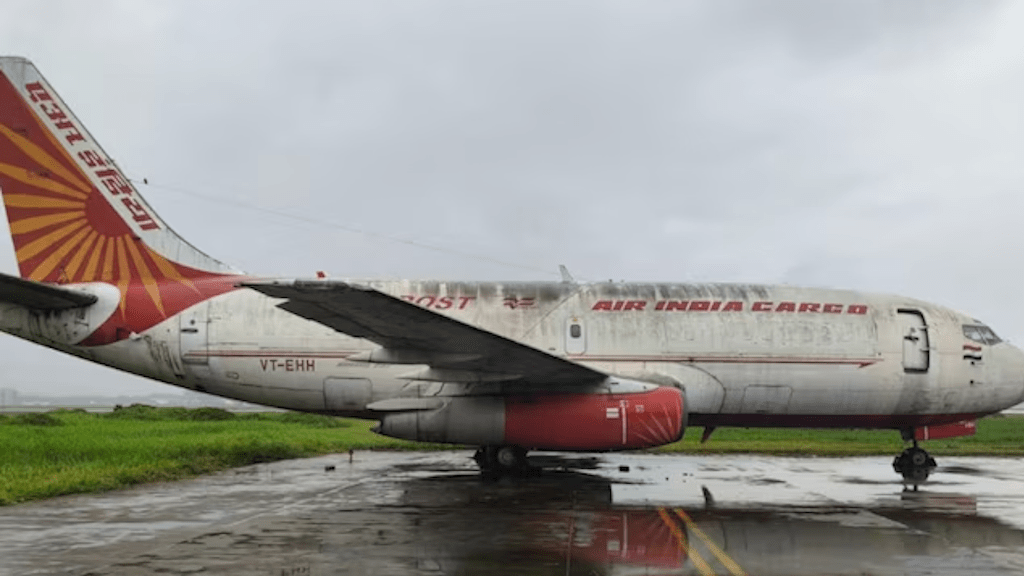
Some great photographs over at Francoflyersof the “Ryanair Water-Ski team” when a B737-800 skidded on the runway and then ran off onto the wet grass. The plane was quickly evacuated using the slides and there were no injuries. If it had been Gatwick, it would have made headline news.

Speaking of headline news, somehow I missed the woman passenger who was handed pliers to remove her nipple piercings before being allowed to board her flight. The TSA has made a statement that correct procedure was followed but conceded that maybe procedure should be modified. Maybe, as long as we get reassurance that we will remain safe from lethal piercings!

Meanwhile, the details of the Liquid Bomb have finally been released. One of the commenters at Schneier on Security has a solution: “No carry on, no hand luggage, naked passengers …that might work” But would the Pink Divas approve?

25 February 2008

Seattle Buzz

A British pilot has been dismissed for “buzzing” a control tower in a Top Gun-style stunt during the maiden flight of a Boeing jumbo jet.

The 777-300ER (not a jumbo jet) was on a VIP flight from Washington State to Hong Kong, with the chairman of the airline was on the flight. After take-off, the pilot did did a very low swoop, flying 28 feet over the Seattle runway. Local ATC knew what he was doing although he’d not filed paperwork for formal approval. He was greeted after landing in Hong Kong with cheers and champagne.

A man described by the Daily Mail as a senior pilot said:

Maiden flights are treated as a bit of a jolly for executives with lots of champagne flowing and these fly-bys used to be done for a wheeze in the old days.

Liem Bahneman was there and posted photographs on his photo site along with this description of the events:

Quite a hullaballo over at the Future of Flight museum for the delivery flight of Cathay Pacific B-KPF, as it was parked on their ramp and there was a large party on their deck.

The 777 rolled out and departed with a traditional wing-rock before disappearing in the low overcast.
[…]
I heard someone whistle and looked out and saw B-KPF in bound for a flyby. Got in position just in time to see it do its low pass. Very exciting, and it generated cheers from the crowd at the FoF.

You can see the photographs he took towards the bottom of the page, marked as Cathay Pacific B-KPF. That was it - there wasn’t a fuss - until a video of his photographs showed up on YouTube:

Wilkinson is planning an appeal - it will be interesting to see where it goes.

26 September 2007

Instrument Rating - unofficial ground school

Jeremy Zawodny has started ground school where he’ll learn IFR theory for his instrument rating. The fun bit is that he’s posting about it on his blog and plans to keep doing so. This is great, from my point of view.

I’d like to get my instrument rating. It’s something I keep putting off, because I want to get more experience first and because I actually like flying VFR. Cliff has his instrument rating and his route planning always looks to me like a dot-to-dot problem rather than a navigational process. But it’s the next obvious thing to do and it sure would be nice to be able to fly in and out of Málaga, who ban VFR flights at the weekend.

If I go for the accelerated IFR program in the US where Cliff did his, then I’m expected to do all the reading before I arrive. That’s a pretty heavy load and quite frankly I’ve doubted my ability to get through it. But Jeremy is doing the reading as a part of a 10-week course which actually gives me a schedule. Reading his views and the comments from his readers each week makes it feel less like I’m learning in a vacuum. I also strongly suspect that if I do keep up with the reading and his posts, he’d be willing to discuss issues that come up as a part of it.

So it’s inspiration to get moving and do something. Except that I think his second class is tomorrow and I haven’t actually cracked open the books yet!

Jeremy’s initial post already has me thinking: it’s clear to me that my view of IFR flights is not the norm. He’s listed three cons to IFR:

  • Longer routes (takes more gas and time)
  • Have to deal with controllers and radio
  • Higher workload

Now I can understand the first one - Cliff and I regularly decide who is flying based on the route, because his is often longer. Not always, going due north from here, his route is much faster than mine because he can fly over Madrid. I would need special-VRF to do that and they never, ever grant it! Crossing the channel, I simply head north and go across. He has to stick to airways. So, yes, I’ve certainly seen that the IFR route can be longer.

But the other two: huh?

Cliff calls, and says something along the lines of: “Hi, I’m here.” ATC replies with “OK, lemme know when you get to there.” Cliff says, “OK.”

That’s it. He’s barely on the radio and he rarely has to think. It seems so simple.

Meanwhile, VFR, I’m constantly talking to someone and having to work out who it is I’m supposed to talk to next. I have to change my routing in airspace that is just packed with airfields and military zones and they all want to know my intentions and damn, am I glad when occasionally someone simply tells me they have me on radar and it goes silent.

Now Cliff tells me I don’t know the half of it, and maybe he’s right, but it sure does seem like a lot less radio and a lot less work when he’s in control.

So maybe I’ll do the instrument rating just so I can prove it. ;)

1 September 2007

Why do I do this again?

Things that happened during the flight with my mother:

1) we ended up without a VFR chart for the majority of the area we were flying over
2) my boyfriend and I descended into major arguments about basic planning (mainly based on heat and nerves rather than actual issues)
3) my mother corrected an Italian Air Traffic Controller when he told me what time it was
4) Austrian ATC gave me a five minute lecture on the radio with every other pilot flying over the Alps sniggering quietly and feeling relieved that it wasn’t them.
5) The auto-pilot died completely

Other than that, it went really well. Honest.

22 August 2007

Malaga - Roma - Mannheim

Everything is ready for the next flight. Cliff will do the first trip IFR. We’ll be flying up the coast of Spain and then across to Menorca for a refuel and last minute check before a long water crossing directly to Rome. Then we’ll continue on IFR (so constantly under watch, which strikes me as a good thing) so we can enter the Class A airspace and go directly to the Roma Urbe airfield.

Roma Urbe on Google maps

Click and then zoom out to see the location. It’s amazing, right on the northern side of Rome! That river is handy too, that’ll make the airfield loads easier to spot.

A few days in Rome (yay!) and then we will bundle my mother into the plane and I’ll fly us to Mannheim. Cliff thinks we can route right over my cousins house in Bavaria on the Austrian border, which will be neat. We’ll be high (argh, Alps!) but if it’s clear weather it should still be some pretty spectacular views.

It’s a three-hour flight, which compares really well to a commercial flight: the time you spend queuing and getting your luggage checked in and yourself through security adds up fast so I suspect we’ll make better time than my mother would have with a Lufthansa flight. Certainly more interesting!

I spent formative years in Mannheim and so although I’ve never landed at the airfield, I don’t think I’ll have any trouble finding the airfield from the sky.

See if you can spot it.

See how Mannheim is nestled in between the Rhein and Neckar? The airfield is just south of the Neckar, which is the lighter, smaller river on the north east. Now you don’t plonk runways in between houses so forget about any built up areas and look for a clear field that could fit an east-west runway.

Found it? Hopefully you’ve zoomed in close and ended up at this lovely airfield.

If you zoomed out and got lost and ended up in Coleman, the US military is likely to want a word with you. So don’t do that. And lets hope that I don’t!