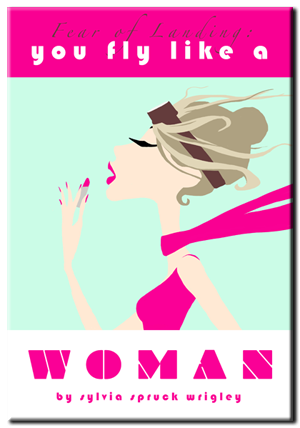
Sylvia Fear of Landing
You are browsing category: Excerpts
12 April 2008

Dinner in Djemaa

“Head towards the mosque,” seems to be the start of all directions in Marrakesh. Even if you don’t ask for directions, they point you that way, telling you that you should go to the square. The Koutoubia mosque and the Djemaa el Fna square are the centre of the world.

During the day, the centre of the square is open and the dancers and snake charmers and henna artists do their best to talk you into handing over your wallet, the seedy underside of tourism. At night the square changes completely. The centre fills with tented stalls. As the sun goes down, the place turns into a huge restaurant with a different delicacy in every direction. Uncovered light bulbs combine to light up the square. At the edges flames rise from large grills covered with sausages and kebabs. Further in there are smaller stalls offering a single dish: Sheep’s head, snails, soup. I’m intrigued by a man at a tiny little counter who is offering egg sandwiches, literally smashing a hard-boiled egg into a piece of flatbread for his customers. Young men speak to us incessantly, eat here, eat with us. One zeroes in on me, separating me from Cliff, perhaps assuming that once Cliff has paused to find me, he’ll choose that stall for our dinner. I push forward, annoyed. The others are less aggressive, an inconvenience that one puts up with, like the flies buzzing around us. They entreat us in French and English and German, trying to spot which language we speak. “Your eyes are beautiful,” says one to me and my blush gives me away. Cliff looks longingly at a stall offering only the sheep’s head but I am too cowardly. I drag him towards one of the larger places with a make-shift kitchen set up, food stacked high. They have real tables and a laminated menu.

The guys from the stall stand around us, pushing menus into our hands and hustling us to a table, Cliff has no chance to object. As we sit down, a big bowl of bread appears with two small bowls for dipping. A small bowl of olives. A large bottle of water. These all show on the menu as an extra charge, it’s quickly obvious that the meal will not be as cheap as it had originally seemed. We aren’t bothered. We dip our bread into our respective bowls: mine is filled with crushed tomato and paprika and onion, Cliff’s is red peppers and spicy, some form of harissa. We dip into each other’s bowl and, content, begin to order in earnest. Moroccan salad (tomato and onions) and grilled peppers and some more bread to share. Cliff blindly orders something called Tanjia, without bothering to ask what it is. I play it safe and ask for lamb and chicken skewers. No alcohol here, we get cans of diet coke and keep the large bottle of water to share.

After the delicate appetisers, I’m disappointed when my skewers arrive, piled onto a plate with a bit of plain couscous. The meat is dry and to be honest, the flavour is rather boring. Cliff gets the better dish, as usual, the scent of lemon and garlic pushing its way to my side of the table. He smiles as he reaches into the small bowl, pulling out a small joint of mutton stained yellow with saffron.

A woman and toddler walk past us, she is selling items to tourists but we are mid-meal and she is gracious enough not to bother us. Her toddler takes one look at Cliff and stops. He grabs a packet of tissues from his mothers box and hands it towards Cliff, who has broth and grease all over his fingers. Cliff gratefully accepts the tissues, the restaurant doesn’t offer napkins and his Tanjia is not very easy to eat. Once he’s wiped himself down he gives the child a two euro coin. The mother accepts it and flashes us a smile before working her way to the next food stall.

We’re surrounded by movement and laughter and shouting, my food goes cold as I stare. The smoke blows in circles, wisping different scents across my nose every few seconds. Tourists weave their way through the stalls, the Moroccans circling them, insisting that their food or tea or air conditioning (a menu waved in your face) is the best in the square. “You look at the others but you come back to eat here, yes? You promise? Promise me!” Children dash around in packs.

A small boy, five or six, comes up to me and looks longingly. I give him a half-smile and he points at my can of diet coke. “It’s empty,” I tell him and turn the can over so that he can see. He stays where he is, not a glimmer of disappointment in his eyes. I keep half an eye on him as he plays with the pole next to me, two pieces of plastic in his hands that he’s flipping against it. He flips one harder and it lands on my handbag. He stands too close to me. I hand him the piece of plastic back and zip up my handbag. He watches me with lifeless eyes. I move the handbag onto my lap and turn away.

Half an hour later, after we’ve finished the meal, I see a man shouting and chasing a crowd of boys out of the restaurant area. He is kicking out - one foot connects with a boy’s bottom, causing an extra burst of speed in the little one. The tourists sitting next to us tut unhappily but I recognise my little friend in their midst. “I don’t know what they were trying to nick but they got caught,” says Cliff. We pay for our meal, less than a McDonald’s lunch would cost, and make our way back home.

10 March 2008

Early Morning Confusion

Cliff shoved my shoulder. “Wake up.”

I squinted and realised it was still dark. The shutters act as my alarm clock but they weren’t due to rise for another half an hour. I ignored him and rolled over.
“Get up,” he said. “It’s your birthday.”

I put the pillow over my head.

“Wake up! Come on, you have to get packed.”

“You aren’t really sending me away because I’m old, are you?”

“Yes,” he said and then grinned when my eyes opened. “It’s a do-it-yourself birthday present. Get packed.”

I admit I was relieved when I saw that he was packing a bag as well. Suddenly I understood why he’d turned down a drink the night before. I’ve been on a diet and he said to wait to have a drink until my birthday - but of course he knew he’d be flying. Still, he wouldn’t tell me where we were going.

“Take three days worth. Expect warm days and cool nights. Make sure you have walking shoes and evening wear.”

That didn’t narrow it down much. “Give me a hint?”

“It’s a single hop.”

That narrowed it down considerably. I drew a circle in my head. “Portugal, France, Northern Africa,” I said.

“All of Spain,” he added. “And Gibraltar.”

“You’d be bored to tears if we spent three days in Gibraltar. And I wouldn’t need evening dress.”

I packed for Paris. I didn’t like to tell him how obvious it was, so I pretended that I was still thinking about it. A weekend of good food and expensive wine sounded quite nice and I could catch up on anything I missed at the hotel.

I admitted I’d worked it out on the way to the airfield. “Oh no,” he told me. “Too cold.”

Oh. I considered the other half of the circle.

“Menorca?”

“Too windy.”

Suddenly it clicked. A place I’d said repeatedly I wanted to go to. The sights of the souks, the comfort of the riads, the taste of chicken with preserved lemons and olives followed by mint tea, the sounds of the mosques calling the Muslims to prayer. The land of the Arabs and the Berbers.

Marrakech Airport

Marrakesh.

I’ve talked about going there for years and even got so far as to investigate places to stay once, but something got in the way and Cliff was never that interested. Now I was finally going to go to this place I’d heard so much about. I was going to Marrakesh!

As we arrived at Málaga General Aviation, it dawned on me. “It’s a Muslim country. What about my birthday drink?”

“I suppose you’ll have to wait until next year.” He grinned as he got out of the car. “Happy Birthday!”

17 October 2007

The Night Before

I’m working on an article called Sylvia’s Mother at the moment (er, if you are my editor, read “working on” as “finishing off”. I swear you’ll have it by Friday) and wrote about my thoughts before taking my mom and my son up in the Saratoga.

This is from my initial draft. I can’t help but feel that the family flying magazine that the final article is aimed at would not appreciate this.

Every time I thought about it, I ended up with my heart in my throat. My mother and my son in the back of the light aircraft. If I mess up, it isn’t just me. They are trusting me to fly the plane - this plane that still scares the bejeebus out of me. What if I lose concentration and twiddle the vertical speed knob counter-clockwise instead of clockwise and the plane starts to dive dive dive down into the ground and we end up a fiery inferno on some Tuscan farm, last words of what-the-fuck?

I know this is ludicrous. I have, on one occasion, twiddled that very knob the wrong way. The moment the nose tilted down, I disengaged the auto-pilot and tilted it back up. No drama, we lost no more than fifty feet of height. I know the fear isn’t rational. But still. Are they out of their minds?!

So, it’s cut for now, although I might try to rewrite it in a more gentle fashion and re-insert it. First I need to go find out what a bejeebus actually is!

22 February 2007

I like foreign places (except when they’re foreign)

I made a mistake.

I pitched an aviation article which involves bitching about people not speaking English. Actually, it’s worse than that. This is about people in a foreign country who do speak English … and then there’s me, bitching that their English isn’t good enough.

Ugh.

Obviously, I didn’t realise that that’s what it boiled down to; I have many failings but xenophobia is not one of them. “Foreign” isn’t a bad word, nor something to be feared –foreign just means someplace I haven’t lived yet.

I could still do the article as it stands — just write 1500 words on how annoying it is that the world isn’t set up better for my convenience. Submit the piece, pick up my cash and move onto the next problem, without any real issues.

Other than sleeping at night.

So, back to the drawing board. The subject is problems with flying abroad and the real issue with the piece is that I have plenty to moan about but no solutions. And the biggest problem that I’ve confronted is language, or my lack of comprehension thereof.

If I knew how to fly across France without having to say “say again?” every other transmission, I wouldn’t try to shove that leg onto Cliff all the time.

To a great extent it’s experience — knowing what to expect in a standard conversation. When Cliff flies, he’s predicting the next conversation. The controller could speak Martian and Cliff would guess the question and give the right answer most of the time. None of this “I need to think this over” stuff.

And then there’s the language itself — he speaks French, he understands French, the French accent is on some level comprehensible to him. I have much less issue flying through Spanish airspace, because the rolling r’s and the short i’s and all those markers of a Spanish speaker are known to me and I can “translate” their words into something approaching RP English very quickly.

I can’t do that in French (and nor should I have to! whines the sulky part of my brain, the part of me who doesn’t think there’s anything wrong with this article and doesn’t understand why she’s not allowed to write it anymore) which means I’m not “correcting” the pronunciation to what I’m expecting. I have to parse every sentence twice which doesn’t sound like much but adds up fast, especially when it’s hectic. And then, often I am still not sure what the controller said. It doesn’t help that often their English is limited such that they literally say it again — word for word, unable to rephrase the way a fluent English speaker might.

It happens in reverse too, of course. My American accent in a sky filled with British pilots can be just enough to get those controllers saying “say again?” right back to me. This is exacerbated by my own language difficulties: I’m not fluent in Aviation English and I’m used to relying on the controllers’ fluency to get by. Once I get flustered and start forgetting those set phrases, we are in real trouble.

Say again?

There are other issues flying abroad, of course, most of them are on the ground. And don’t get me started on military airspace. I could tell you stories …

Ah, and so we get to a start point. Sometimes just having someone to bounce things off of makes all the difference.

OK, I’m off to write that article. Thanks for the help.

11 January 2007

Rousse Tower

We sat on the terrace of the Chalet, gazing out at the water and Sark in the distance, while Peter and Mary put up with a torrent of questions about the island and the must-see places.

“And while you are exploring the bays, you should go visit the towers, they’ve been put into quite good order, although I still wouldn’t want to be a soldier living in it during a winter gale! Just don’t believe anyone that tells you that the towers are all Martellos. Most of them are not.” Peter gave me a stern look.

“Not what?”

“Not a Martello tower,” Peter explained.

It seems that in 1794 during the Napoleonic Wars, the British responded to a plea from Corsica to help them fight off the French. The Royal Navy attacked and captured a large, round tower on Mortella Point but it took two days and they suffered unexpected casualties. When the British left Corsica, they decided to destroy the tower to keep it from being used by the French but even that proved more difficult than expected. The Royal Navy was impressed and made plans of the tower, apparently at this point getting the name wrong. The decision was made to create towers in the same style to defend the English Coast. In the early 1800s a hundred of these towers were built: chunky brick structures that were 30 foot tall and 13 foot thick on the seaward side. The towers became redundant when Napoleon defeated in 1815 and were never used in battle.

“We have 15 towers along the coast,” Peter told me, “but they pre-date the Martello towers, built in 1780. They are smaller and not as strong. Guernsey does have Martello towers: Fort Grey is one, they call it the cup and saucer. I think there are two others. But the locals will tell you they are all Martello towers. They aren’t.”

I nodded, impressed at the pitfalls involved in describing disused fortifications.

Much later, I had forgotten about the conversation when I saw grey brick looming up from a green field covered in buttercups. I realised that I had found one of the towers that Peter had been telling me about. I explored around it and its cannons. I laughed aloud when I found and read the plaque attached to it. The plaque is there to inform visitors that they have reached Tower No. 11, Rousse Tower, and that it is not a Martello tower.

5 October 2006

The Shipwreck of the Stella

The Casquets, the set of towers we’d seen on the flight in, is not surprisingly an important figure within the recent history of the island but the most interesting and tragic story is told at the Maritime Museum: the wreck of the Stella.

In the 1890s the competition between the ‘London and South Western’ and ‘the Great Western’ railway companies was heating up. The route across the Channel to the Channel Islands became the main battleground, with the ships openly racing each other to get their passengers ashore first. A number of issues were reported (with the Captains generally claiming they were “racing the tide”) but generally this competition was seen as exciting and a newspaper article in the Guernsey Star reports on a race between the Ibex (Great Western) and the Frederica (London and South Western) as if it were a sporting event. “The Frederica, skirting near the rocks and crossing the Ibex’s bows, beat the latter, after a grand race, by one minute and a half at the pier heads.”

The Stella was one of three steamers put into service in 1890 by London and South Western specifically for speed; the company’s advertising focused on best crossing times. By 1899, however,  there had been at least one accident due to the competition (the Ibex struck a ledge going full-speed 40 feet from the Frederica) which led to an inquiry and the Captains certificate being suspended for six months. A sensible concern regarding the racing is beginning to arise and the two railway companies were “making tentative efforts to call a halt”.

However, the ‘Easter run’, the first daylight runs of the season, whetted interest in the best crossing times and spirits were high with special low fares offered for the holiday.

The Stella departed on March 30th under the command of a seasoned Captain within this context: a priority of getting the ship and her passengers to the Channel Islands as quickly as possible.

The ship met rail passengers from Waterloo at Southampton and then began the trip to Guernsey and Jersey with 217 on board. The weather was sunny and clear when they departed Southampton and continued to be fine as they passed the Isle of Wight. Shortly after passing the Needles, a thick fog began to form. The captain slowed to half-speed until they cleared the fog and then resumed his initial speed of 18 knots.

Shortly thereafter the fog descended around the Stella again but the Captain kept the ship at 18 knots. The Captain and various crew members, including the first officer, remained on the bridge, with a seaman sounding the fog whistle. At this point, the Captain and crew seemed to believe they were still half an hour away from the Casquets: a dangerous reef with three lighthouses placed upon it which was used as a standard visual turning point for the route to Guernsey.

It is unclear how the Stella had managed to veer off her course but at this stage she is still travelling at 18 knots in heavy fog. ‘The Wreck of the Stella’ by John Ovendon and David Shayer gives the following chilling account of Captain Reeks final moments:

“At 4pm three things happened simultaneously. Reeks heard — and the sound must have made the hair stand on his neck — a fog-horn blast of immense power from directly above his head; Hartup in the bow yelled ‘Stop her’ and ran back along the deck covering his head with his forearm; and at the same moment the men on the bridge and a handful of passengers on the deck saw, ‘as though a door had suddenly opened’, an immense rock loom out of the fog 80 yards directly ahead, towering over the ship.”

The Captain tried evasive action but it was too late and the Stella was going too fast. The dangerous shoals of the Casquets tore out the bottom of her hull. The fog was such that the keepers of the lighthouse never saw a thing.

Within 8 minutes the ship had sunk. 105 passengers and crew died in the worst disaster in the history of the Channel Islands’ mail steamers.

3 October 2006

Early One Morning

I sat on the concrete, trying to apply mascara and lipstick without a mirror, surrounded by parked planes. What the hell was I doing here?

A few weeks ago, it had all seemed sensible and, dare I say it? …fun. I was wildly optimistic about the whole idea and even invited Cliff’s mother to join us for the first trip to the Channel Islands. I bragged about my ability to get by on a wing and a prayer and even bought a jaunty little wheelie bag for the island flying. This lasted until it was actually time to pack. I sat at home on my bed, surrounded by piles of clothes — winter jumpers and summer t-shirts, walking clothes and dinner outfits and shoes for all occasions. I cut it down to half what I thought I needed and then looked at the dinky bag again. Not even close. I finally broke down and dragged a proper suitcase up from the garage and promptly filled it.

I was spending a week island-hopping in a small plane. The British Airways staff who checked me in for the flight to Heathrow marked my bag as “heavy.” This wasn’t an auspicious start.

The plan was simple: fly to Heathrow and get a lift to Elstree in North London the night before, make sure the Saratoga looked healthy and happy, then stay locally and leave for Guernsey first thing in the morning. We arrived at the airfield at dusk and I couldn’t help but feel that the big, bulky, heavy lump of a suitcase was over the top for the single night’s stay, so I shoved it into the back of the plane and left it there.

This led to me waking up in a small brick hotel with nothing but my flight bag. I am not really a morning person. At quarter to eight I lay there gripping the side of the bed tightly, willing myself to wake up and be functional. Cliff tried to tempt me with descriptions of a fried breakfast. I put the pillow over my head.

Eventually I forced myself out of bed. Bleary-eyed and out of sorts, I realised just how foolish I had been. No shampoo, no hairbrush, no toothbrush for God’s sake. Just me and some maps.

In an hour, I would be flying. Under the circumstances, it seemed a bad idea. I took a deep breath, splashed water on my face and considered flight planning, specifically the weather. The correct procedure is to check met reports and phone airfields directly. My handy-dandy copy of Pooleys Airfield information has the phone numbers. It also has two pages of instructions for flying into the Channel Islands, in addition to the standard airfield information. I felt intimidated. I decided to avoid speaking to them in case they noticed quite how incompetent I was and banned me from coming. I looked out the window instead. The sun was shining. A taxi was waiting for us outside. It was time to go.

That was how I ended up on the tarmac, brushing my hair and wondering if it was too late to cancel. It was: I watched another taxi deposit Cliff’s mother, Anne. She arrived along with her wheel chair and a tiny carry-on bag with everything she needed for the week. I blushed and hid my Samsonite out of the way and pretended to make a big show of how heavy her case was. It weighed slightly more than my make-up bag.