Sylvia Fear of Landing
You are browsing the archive for: June 2008
27 June 2008

Flying Around the Web

Another selection of interesting and intriguing aviation articles that I stumbled upon while I should have been working.

Stainless Steel Lunch Jar
I want to get one of these for in-flight food on the Saratoga. We do the flight from Málaga to Southern England in two three-hour hops - an alternative to airport junk-food would be great.

Sky Pirates
Documentally travels light, so with the new baggage charges in place, he asked for a discount.

Crash survivors considered eating pilot
I suppose it depends on how many annoying announcements the pilot made.

The Glamour of Flight
A fun collection of vintage photographs of flight attendants from times gone by. I’m not advocating a return to beauty pageants for flight crew but the photographs made me grin.

Airplanes of the future could be self-healing
Bad enough they almost fly themselves these days, now they don’t even want maintenance.

ICON A5 Folding Plane Looks Like Sportscar
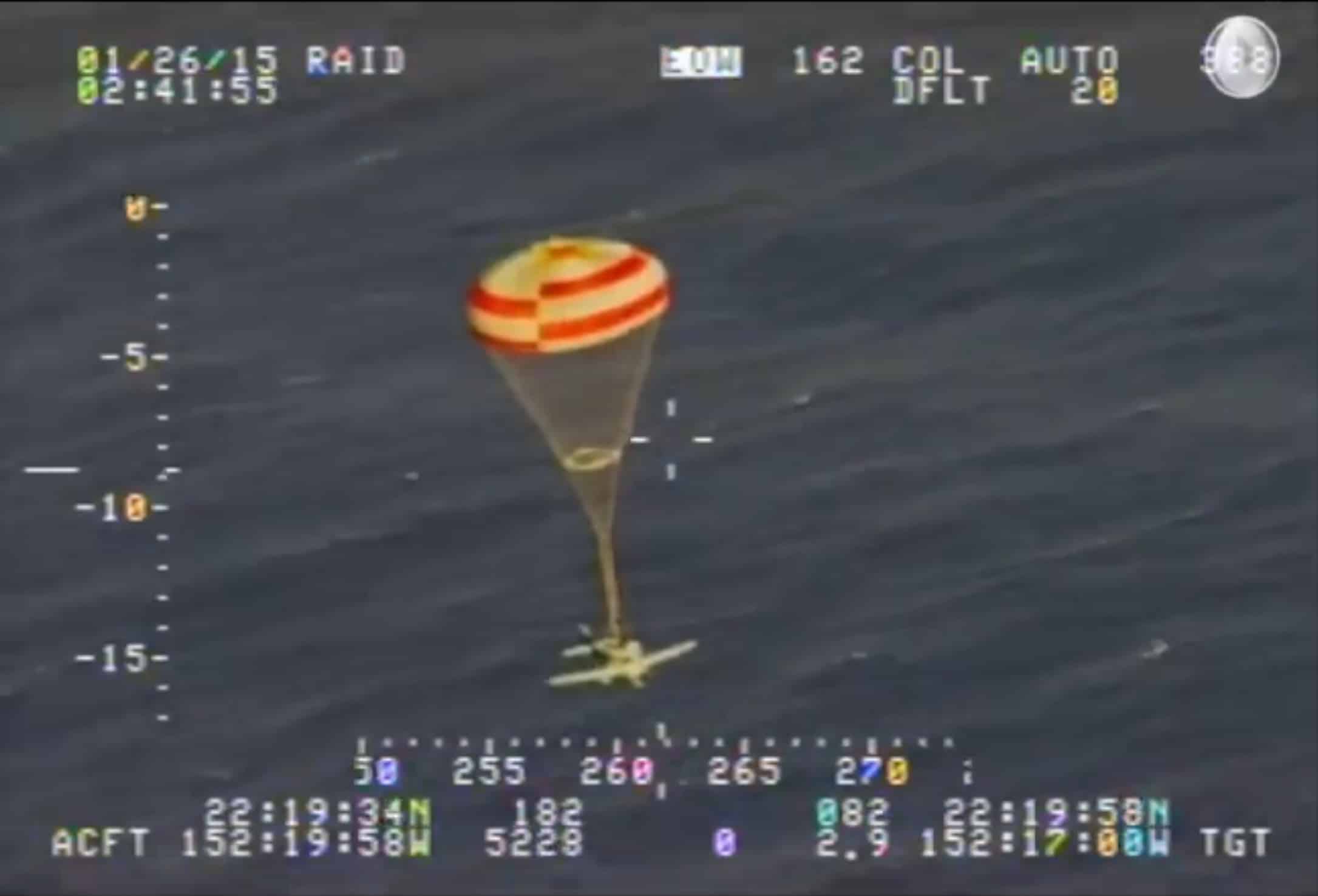
It looks interesting although the supposedly “increasingly common” full parachute for small aircraft made me pause. Has anyone actually ever seen one of these outside of magazine articles?

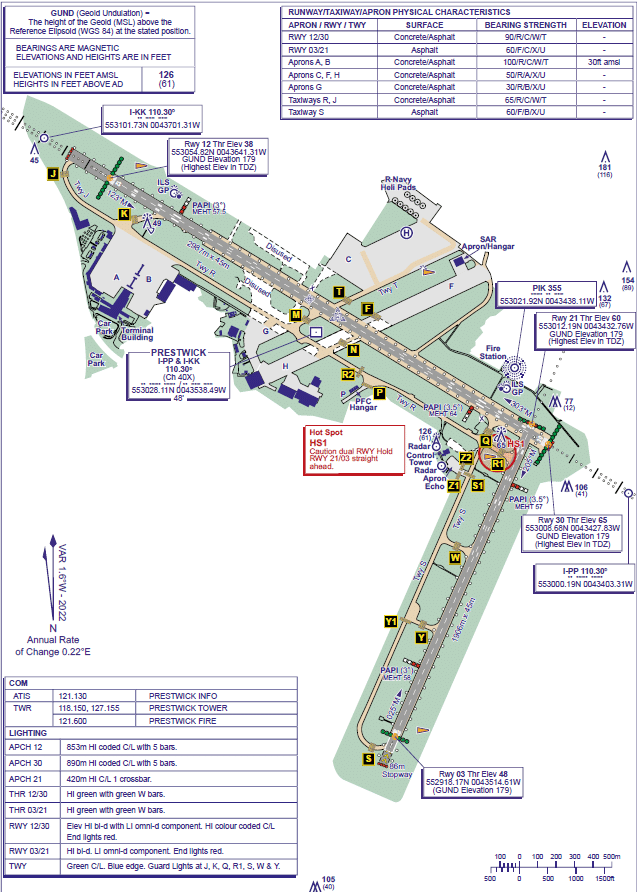
Aerodromes in the UK AIP
Online access to charts for civil licensed aerodromes in the UK - great when you are travelling (or for couples like us who tend to fight over who has access to the Pooley’s)

23 June 2008

Southend Inquest Declares Student Death Accidental

Sam Cross was just another PPL student - he needed one more birthday before he could complete his licence but he wasn’t in a rush. He was 16 years old and had flown 15 hours and, in his previous session, he’d gone solo for the first time. His instructor considered him an accomplished pilot.

Aircraft Type: Cessna F150L
Registration: G-BABB
Injuries: Crew - 1 (Fatal)
Nature of Damage: Aircraft destroyed

A summary from the Air Accidents Investigations Branch bulletin:

During his second solo flight the student was instructed to carry out an unfamiliar and non-standard manoeuvre. Presented with a situation beyond his experience, he failed to reconfigure the aircraft for level flight. The aircraft continued to fly level at a power setting which the available evidence indicates would have been insufficient to maintain flying speed, and eventually the aircraft stalled at a height from which recovery was impossible.

This tragic accident happened at Southend-on-Sea in July, 2006. The inquest was completed last week and the death of Sam Cross was designated as accidental; however the CAA have implemented a number of safety recommendations in order to avoid a similar build-up of stress on an inexperienced pilot.

What happened? The bulletin says:

The student, who was training at Southend Airport towards the issue of a Private Pilot’s Licence, was on his second solo flight. Having established the aircraft on final approach, the student was instructed to go around so that a faster aircraft approaching to land behind his aircraft would not catch up with it. Both the controller’s instruction and the student pilot’s acknowledgement involved non-standard RTF phrases. In order to avoid any possibility of conflict between the two aircraft the student was then instructed to turn away from the final approach track. During this manoeuvre, the student flew level at low altitude and it is likely that the aircraft remained in the approach configuration with insufficient power applied to maintain flying speed. In level flight, the aircraft stalled at a height from which recovery was impossible and it struck the ground in a public park approximately 1 nm from the airport. The student pilot was fatally injured.

Initial solo flights are straight-forward. You fly in a pattern around the airfield, called a circuit. First you’ll simply take off and follow the circuit and land again. The next stage is to start coming down as if to land but as the wheels touch the runway you clean up the plane and take off again - a touch and go - to save time.

Before going allowed to go solo, you need to be landing competently and - more importantly - you need to be willing to go around if everything isn’t just right. Going around means aborting the landing: you put full power on and get the plane up to speed and then bring up the flaps and climb away, ready to rejoin the circuit and try again. The emphasis at this stage of your training is to recognise a less-than-perfect approach and be willing to throw it away and try again. Only once the instructor is convinced that you can and will go around safely will he let you fly alone.

Sam Cross understood about going around.

His instructor notified ATC that they had two flights planned, the instructor would take his student up for a few circuits and then leave him alone in the plane. Persons on board was omitted from the Flight Progress Slip as it “could not be done without ambiguity” but the radio controller was informed that “at some stage the student pilot would be sent solo.” This was confirmed by the instructor when he vacated the plane and again by Sam Cross as a part of his radio call. Two minutes later there was a shift change.

The controller who took over stated that he was not made aware that Sam Cross was a student flying solo.

Then the approach controller received details of a Piper Meridian coming in from the south. Flight priorities are such that a “normal” flight such as the Piper gets a higher priority than the Cessna which is a training flight. It is standard practice to make way for faster traffic when possible - bearing in mind Sam Cross is in a slow-moving plane going around the circuit - he’s pottering along and he doesn’t mind. The Piper just wants to get straight in and down and parked. The cost of a go-around to the student is negligible - one more circuit out of dozens. Unexpected circuits on commercial flights quickly add up. The Cessna would have been going around 60 knots on approach; the Piper 120 knots.

That’s not to say only students go around: every pilot is always ready to go around . However, it’s sensible to avoid it, if possible under normal circumstances, without risk. That was the initial decision: Sam Cross called final and was told to maintain runway centreline but go around at circuit height (one thousand feet).

However, the Piper was so much faster than Sam Cross’s little Cessna that the controller changed his mind: he was concerned that if the Piper had to go around, he’d end up passing the Cessna from underneath it, a potentially dangerous situation. He made a new call:

“ER GOLF BRAVO BRAVO DISREGARD THAT JUST TAKE A LEFT TURN AND FLY NORTH I’LL CALL YOU BACK IN VERY SHORTLY.”

Focus changed to the incoming Piper and it was confirmed that the Cessna would get out of the way and the Piper could come straight in to Southend. Meanwhile, the controller has realised he did not receive a response from his previous call to the Cessna. He called him again, just to confirm, and told him turn northbound now. After the third call, Sam Cross responded:

“BRAVO BRAVO TURN NORTH”

The controller thanked him for being helpful and cleared the Piper to land. Then he called Sam Cross back and told him to make a left-turn and orbit back onto final approach. Sam Cross repeated back:

“MAKE LEFT HAND TURN ONTO FINAL APPROACH.”

Meanwhile, his instructor was getting nervous. He was listening in on the radio and aware that Sam Cross was being given instructions to do things he was unfamiliar with. Visibility was dropping. He watched for Sam Cross to come onto final so that he could ask the tower to tell him to make a “full stop” landing rather than continue with the circuits. The student would need a break after this.

Using binoculars he watched the aircraft fly away from the final approach track in what appeared to be the opposite direction to base leg, at lower than normal circuit height with what he considered to be a nose-up attitude and low airspeed. He then saw the aircraft reverse direction with a high rate of turn before entering a spiral dive, from which he considered there was no possibility of recovery.

Sam Cross and the plane crashed into Eastwood Park, still spinning. Bystanders ran straight to the scene of the accident, despite the smell of fuel and the risk of an explosion. Sam Cross was dead.

His instructor confirmed that Sam had not been taught to do orbits in the approach configuration - nor would he have expected to, at that stage of his training.

If instructed to go around, the student had been taught to apply full power, position the aircraft slightly to the right of the centreline , maintaining a positive climb, fly straight ahead and select the flap up in stages.

However, Sam Cross was told to go north to get out of the way at a point when cockpit workload is already high. He turned off of his final approach, expecting to join it again after the Piper had flown past.The request to go around had specifically been rescinded. It must have seemed logical to leave the plane in the approach configuration: leave the power alone and keep the flaps extended. The difference is that the plane is flying straight and level now, rather than descending down to a runway to land. He’s not been taught how to deal with this.

Sam Cross has a lot on his mind. He’s been taught a very specific sequence of events and everything is suddenly contrary to what he’s been taught. He’s going the wrong way around the circuit. He’s probably concerned about this FAST TRAFFIC BEHIND that he can’t see. The controller is busy and there’s no one else to turn to. It’s a safe bet that Sam Cross was not at full capacity and in fact was starting to panic. Certainly, he didn’t appear to have understood the loss of speed nor react to the stall warner siren which would have sounded directly before the stall.

As a part of the investigation, a test pilot flew another Cessna F150L to recreate the conditions that Sam Cross found himself in:

The aircraft decelerated and eventually stalled with a nose high attitude. As it stalled, the example aircraft rolled quickly to the left, adopting a bank angle of approximately 60º within one second. Simultaneously, the nose dropped approximately 45º below the horizon and a high rate of descent developed.

Sam Cross’s Cessna went straight into a spiral dive, just like the example plane. The experienced test pilot recovered from the dive but lost 400 feet in the process. Sam Cross was flying at a height of between 200 to 300 feet when he went into the dive. He never had a chance.

The controller stated to the press that he would never have given those instructions to Sam Cross if he had known it was an inexperienced student. The AAIB bulletin says:

By turning G-BABB to the north he intended to place G-BABB safely out of the way, focus attention on N347DW until it had landed and then re-direct his attention to G-BABB. However, it is likely that of the two pilots immediately involved, the pilot of N347DW, who was bound to be more experienced, would have been better equipped to deal with demanding or unusual instructions.

The Southend Manual of Air Traffic Services offers no advice to controllers in regards to dealing with training flights. The AAIB’s initial safety recommendation in the bulletin was to fix that specific issue:

Safety Recommendation 2007-036
It is recommended that London Southend Airport includes information relating to the notification and handling of flights by inexperienced solo pilots in its Part 2 of the Manual of Air Traffic Services.

As a part of the accident analysis, the CAA stated that they’d like to see students identify themselves to traffic controllers which resulted in the following two recommendations from the AAIB:

Safety Recommendation 2007-050
The Civil Aviation Authority should instigate the use of a suitable prefix, for use in civil radiotelephony, to signify a student pilot, flying solo.

Safety Recommendation 2007-051
The Civil Aviation Authority should amend the Manual of Air Traffic Services Part 1 and the Radio Telephony Manual (CAP413) to emphasise to controllers that pilots identifying themselves as students have limited ability, which must be taken into consideration when issuing instructions.

These changes are all focused on ensuring that the controllers are aware of who they are dealing with and what the expected level of experience is. No one expects a student on his second solo to understand what the controller at Southend meant for Sam Cross to do.

…although the use of non-standard phraseology probably exacerbated the student’s difficulties, even a clear instruction to orbit in the approach configuration would have been problematic. Under existing provisions, air traffic controllers are not expressly prohibited from instructing this manoeuvre.

Thus, there is an argument that Sam Cross should have been given precedence due to his inexperience. Also, although it was a training flight, the fact that he was on final should have given him precedence over a plane still coming in. Sam had been told he was number one to land and had called final in full confidence that he would be cleared. A sudden flurry of activity at this point is not what any pilot is expecting.

The further recommendation from the AAIB makes it clear that they did not feel the manoeuvre was necessary under the circumstances:

Safety Recommendation 2007-037
The Civil Aviation Authority should amend MATS Part 1 so that, with the exception of issuing instructions to go-around, controllers shall not issue instructions that would require an aircraft in the final stages of approaching to land to deviate from its expected flight path unless exceptional overriding safety considerations apply.

None of this can help Sam Cross now. As a mother, my heart bleeds for the young boy in the cockpit, at a loss as to what to do and without the guidance to fix it. As a pilot, I know that the circumstances that culminated in his death are not common and that the accident could not have been predicted. If we can learn to help inexperienced pilots in difficult situations rather than adding to their workload, it has to count for something.

What else can we do?

Further reference:

16 June 2008

After Dark

Flying always feels different after sunset. Isolated, elsewhere, in orbit instead of just above. My world becomes the plane and the plane is the entire world. Cities and farmland and lakes and railway lines, they are real. But the twinkly lights below me, the reflection of a desert sky, I find it difficult to believe that there are people down there. The black land below me gains a sheen of unreality, a world between darkness and dreams.

When you are flying at night, darkness is the enemy. Darkness could be an isolated area but it might be cloud or worse, a mountain rising above your height, obscuring your view. However unreal it may feel, that darkness may be very solid and closer than you think.

At the age of forty, I finally have an excuse for being afraid of the dark.

7 June 2008

Landing in Lausanne

To prepare for our trip to Switzerland, I flew with the Saratoga to Andrewsfield, a small airfield near Stansted in Essex that I’d not been to before. Andrewsfield was built by the Americans in World War 2 and is one of the few airfields around London which will allow for unlimited circuits - as long as you are willing to pay. More importantly, it has an 800 metre grass runway - ideal for practising short field landings. After an afternoon doing circuits there and a few more at North Weald, I felt quite confident about landing in Switzerland. After all, Lausanne has a hard runway and it has an additional 75 metres - it should be trivial in comparison!

Lake Geneva

The flight was uneventful but the view - wow. It was just astounding. We told Geneva control we were ready to descend and came down to 3,300 feet over Lake Geneva … where all I could do was look around in awe. It took a few moments before my concentration returned to the primary task: where was Lausanne airfield? I knew the general direction where it should be and there’s only so far wrong you can go with GPS but it was still disconcerting. Geneva clearly weren’t going to let me speak to Lausanne until I actually had the airfield in sight but meanwhile I was coming in fast and had no idea of the local traffic.

In the end I lied. I positioned myself for a downwind join and told Geneva I had the airfield in sight. As it happened, by the time I called Lausanne, I really did! I spotted it as I was changing the radio and was pleased to see that I was lined up correctly. I informed them of my intentions and got the details of a second plane in the circuit, way ahead of me. It seemed almost too easy, straight in from the lake for downwind on a right-hand circuit. It may not seem like much but the airfields I’ve flown at recently have been anything but text-book!

It was on the base leg that I really focused on the power lines that Plastic Pilot had told me about. I realised with a start that I might be descending a bit fast under the circumstances. I pushed the power back on as I turned into final, mumbling “I see what he meant” as I considered my approach. I have a tendency to land fast at the best of times and I was watching my airspeed closely as I finally felt safe to angle down towards the numbers.

“The PAPI says you are high but I wouldn’t worry about it, looks good,” said Cliff. I was concentrating so hard, I’d forgotten he was in the plane. I was quite happy to be high and carried on with my approach. Rate of descent was looking good now, airspeed 90 knots, there was the runway. I could almost hear Lee’s voice, “You want to be the height of a double-decker bus, wait for it.” There, perfect height, a gentle flare … where the hell did the runway go?

Runway 18

I swore aloud as the plane floated. After all my preparation, at the last minute I forgot about the downslope. There I was, floating above the runway. What had Plastic Pilot told me?

Runway 18 has power lines on short final and a downslope. Be ready to go-around.

I had an urge to stand up and jump up and down in the cockpit to bring the plane down onto the ground where it belonged. A moment later we touched down. We had arrived in Lausanne.

Rainbow over Lausanne

The weather deteriorated within hours of us arriving: there would be no more flying by this VFR pilot during our stay there. I didn’t really mind - it meant I got more than my fair share of red wine and kirsch that evening.

But it does annoy me that I fluffed up the landing like that, when I had fair warning and knew better! So listen up, Lausanne, I want a rematch. Next time, I’ll get it right.