You are browsing the archive for: January 2012
27 January 2012

Wish You Were Here (Webcam Roundup)

This video of a frozen plane was posted to reddit and made me shiver:

“After a night of freezing rain, this is what we showed up to. Almost an inch of pure ice on almost every surface of the plane. Even the antennas were completely cased in ice.”

It struck me because today is a glorious flying day here in sunny Swansea. I realised it has been a while since I’ve looked around the UK airfields. What a perfect day for getting up in the air. The images below show the view this afternoon when I took the screenshot. If you click on the image, you’ll go to the airfield website which includes the webcam for an up-to-the-minute view.

Cambridge

Cotswold (Kemble)

Dunstable, Bedfordshire

Glenforsa. Isle of Mull

Gloucestershire Airport

Headcorn

Hollym, Withernsea

Jersey

Kirkwall

Lydd

Northumberland

Oxford

Portmoak near Kinross

Sumburgh, Shetland Isles

Shoreham

Shropshire

Wellesbourne

White Waltham

You can see older views of many of the same airfields in the following posts:

I’ll have to look at them by airfield instead of date and see how they have changed!

20 January 2012

New York Flying from the Front Seat

I’ve got a soft-spot for aviation stories told well and I found a goldmine this week.

“La Guardia Airport, information Charley. Clear, wind 220 at 10, temperature 65, dew point 42, altimeter 30.27. Landing and departing runway 22. Advise on initial contact that you have information Charley.”

I was still about fifty miles away from the Big Apple, level at eleven thousand on an IFR flight from a small Pennsylvania town where I had spent the previous night.

This is the beginning of Conga Lines, Skylines and the Lady with a Torch, one of the many great essays on the Stoenworks Aviation website.

It had all of the makings of another beautiful day as VFR conditions extended up and down the Eastern Seaboard. Although we were in sunshine, the valleys down below were still in shadows with the cities and towns showing their twinkling lights as we passed eleven thousand feet overhead. This was one of my favorite times as a corporate pilot. Just me and the airplane, early in the morning. It was like you _owned_ the sky.

I have no time/money for flying this month and the weather’s not great for it even if I could get away. But reading Hal Stoen’s stories almost makes me feel like I’m there. He’s been a flight instructor, a charter pilot, worked for mail and commuter airlines and after all that spent eighteen years as a corporate pilot.

“Good morning Approach, Cessna 1557 Golf is with you, five thousand, Charley.”
“Good morning 57 Golf, turn right heading 090, intercept the runway 22 localizer and track it inbound. Descend to and maintain 2,500.”
“Zero nine zero, localizer inbound, out of five for two point five, 57 Golf.”
“Cessna 57 Golf I have traffic behind you, a Boeing 727. Keep your airspeed up as much as practical.”
“Ah, roger (Chuck Yeager homage), I can give you about 175 knots up to the Marker, then I’ll have to slow down.”
“Understand 57 Golf, give me what you can.”

I bring the power up a few more inches to raise the airspeed to 175 knots indicated. The expensive real estate of Manhattan Island begins to fill the right side of the windshield as I see higher traffic most likely descending into Kennedy, about 15 miles ahead and to our left.

Even better, Hal Stoen takes me places that I’ve never been. He let’s me join him on flights that I will never fly. He’s in the Cessna 421B, a pressurised 8-passenger aircraft. It’s a beauty.

My head is down for a moment as I verify and then switch the auxiliary main fuel pumps from “on” to “standby”. When I look up again I see that we are aimed directly at the Empire State Building. Not a few degrees left of it, nor a few to the right. We’re headed right at the darn thing. This is not faulting the guys at La Guardia, we’re VFR- see and avoid. Wow, what a perspective. 57 Golf had a large front windshield, and the 102 story structure was occupying a fair portion of it.

“Cessna 57 Golf, squawk 1200. Good morning.”
“Ah, roger 57 Golf…..shouldn’t we call somebody?”
“Well Sir, you can give Newark Departure a try if you like, they’re on 126.45. So long!”

It just amazed me. Here we were, over one of the largest cities in the world, and it was “..if you like.” I watched for traffic, and the skyscraper, as I tuned Comm. 2 to 126.45.

“Good morning Newark, Cessna 1557 Golf with you, over downtown Manhattan, squawking 1200. Advisories if you have the time.”
“Cessna 57 Golf, Newark. Stand-by.”

As we were “standing-by” we whisked past the Empire State Building. I could see people out on the observation deck, even at this time of the day. I couldn’t help myself- I waved at them. The temptation to circle around the lovely structure was almost overpowering.

When I mailed him to tell him how much I loved this story, he told me that he thinks he will always regret not making a turn around the Empire State Building. But man, what a view he must have had.

You can read this full story and many more on the website. I swear, if Airman Lost doesn’t bring a tear to your eye, you might not be human.

I’m warning you though, be sure you have an hour or two free before you visit the website. His stories include life lessons (“Never take your first flight with your new boss without the keys to the airplane”) and practical advice (“How to find a good restaurant when at high altitude”) and pilot training (including “a basic primer for the flight simulator neophyte”) and not-so-practical advice (“Achieving weightlessness in a Cessna 150″).

His entire collection is available for sale – 900 pages devoted to aviation stories and flight instruction help – for $12.50 on CD or as a Kindle eBook series on Amazon. Based on what I’ve read on his website, it’s a bargain.

But you should go look for yourself: Stoenworks.

13 January 2012

Cirrus Parachute System in action

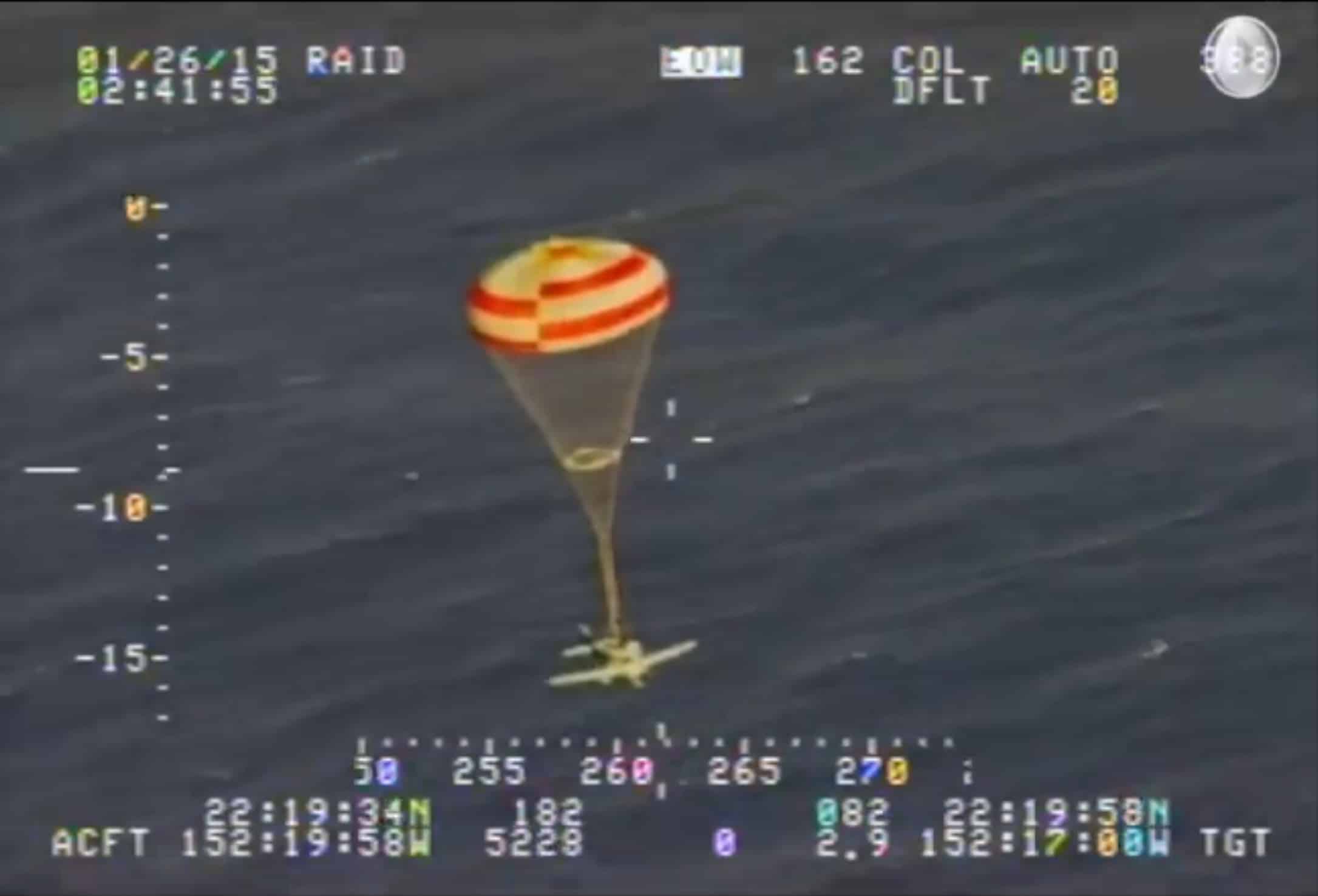
I just discovered this great video footage of a US Coast Guard rescue in the Bahamas.

It happened just last week. Dr. Richard McGlaughlin and his daughter Elaine were flying his Cirrus SR22 to Haiti to do charity work, something Mr McGlaughlin has done regularly since the earthquake.

Dr. McG’s Haiti Chronicles – Cirrus Owners and Pilots Association

Dr. Dick “McG” McGlaughlin flew in with a Cirrus full of medical supplies because he “couldn’t stand to hear one more thing on the TV”. His first (short) report from ground zero said, “Everybody should come here- a great ameliorative for feeling put upon.” Interesting that McG ended up taking his own advice to heart. He has since flown his Cirrus to serve in Haiti more or less on a once-monthly basis.

They were a few miles out from Andros Island when they encountered engine trouble. The oil pressure dropped slightly and then within a few minutes it dropped to zero.

Elaine wrote about the experience in the COPA comments:

I’m writing this email from the Sheraton hotel in Nassau, after one of the most exhilarating days of my life. My dad and I took off from the smaller Tamiami-Executive Airport this morning, en route to Haiti after picking up his plane from a couple weeks of routine annual maintenance. I had bought a shiny new digital camera for the trip that morning, and was hungrily reading through the owner’s manual (something I never do) when I heard my dad speak into the headset, calling out to the nearest air traffic controllers that he planned to do an emergency descent because of an unexpected drop in oil pressure.

I thought that was kind of weird, but was mostly interested in organizing my granola bars and putting my travel sunscreen into MY backpack instead of his, and figured that if anything was really going on we would calmly make an unplanned landing on some dusty runway in the Bahamas, fix whatever was going on with the oil pressure, and be on our way. Then my dad’s voice became a little more pressured, and I noticed his hands were shaking.

They were at 9,500 feet. After the radio call, the engine seized and the propeller stopped. Dr. McGlaughlin configured the plane as best as he could and continued to speak to air traffic control. Elaine gradually became aware of the gravity of the situation.

My dad was obviously spooked, but mostly composed, adjusting whichever controls would respond at that point and continuing to communicate with air traffic controllers in various locations. They asked how many “souls” were on board, and I thought to myself that that particular word choice was decidedly morbid for a moment like this. As my dad’s voice became more gravelly, I sensed in him and began to feel myself what I now have the time and luxury to recognize as dread. Dread is sticky, humid; it fills the air and waits heavily, knowing and fearing, hating to have to know, but knowing all the same.

[...]

The air traffic controllers told us that the U.S. Coast Guard had been notified, and that we were four minutes from land. Four minutes was about three minutes too far, because we sank to 2200 feet at what looked to be a mile off shore, and my dad decided to pull the parachute. BOOM! We shot forward, I hit my head pretty hard on the dashboard– the energy of the parachute rocketing out the back of the plane caused us to pitch forward, and all of a sudden we were stopped still, dangling it seemed, looking straight down at so much flash-blue water. Just as quickly as it had careened over, the plane righted itself, the parachute slider doing its job, working the larger overarching parachute upright into the sky. Then we floated downwards, somewhat slowly, and hit the water HARD, a big firm collision right up your spine and down, but before I knew it water was rushing in EVERYwhere, and I couldn’t get my door open and whoa that water was pretty cold, aren’t we in the damn Caribbean here anyway?

Dr McGlaughlin stated separately that he was unsure of what would happen with a Cirrus Airframe Parachute System (CAPS) splash-down. He decided that he would pull at 2,000 feet above the ocean but then became impatient and deployed at 2,300 feet.

Early Reflections on CAPS Pull #32 by Dick McGlaughlin in the Bahamas – Pull early, pull often! – Cirrus Owners and Pilots Association

Dick vividly describes their splash down as a hard landing, harder than he expected. But both he and Elaine were uninjured. The cabin quickly began to fill with water through the fresh air vents, so they felt urgency to get out of the plane. While Elaine’s door would not open, the pilot door opened easily and both got onto the wing with their life vests and life raft.

As you can see, the plane did not break up on impact and they appear to be waiting relatively comfortably considering the 4-man raft looks about the size of a postage stamp.

Currrus have stated that this is the 28th save (making for a total of 53 survivors) since the Cirrus Airframe Parachute System was launched. Although having read the account, I’m sure Dr McGlaughlin could equally have handled a standard water ditching – he was perfectly in control and making decisions in what is for all of us a frightening possibility: engine failure during a water crossing.

Don’t you just love a happy ending?

06 January 2012

Half-Asleep at the Controls

The Air India Express 812 accident in May 2010 was a shocking reminder of how important cockpit management resources: the flight crew interactions and the adherence to procedures. There was nothing wrong with the plane. There was nothing wrong with the airfield. The weather was good. Everything that went wrong, went wrong in the cockpit.

The media is very focused on on fatigue at the moment and how it affects pilots. This 737 running off the runway, killing 158 people, is a reminder that fatigue is only one small piece in the puzzle.

Air India Express 812 was a quick-turnaround night flight, Mangalore to Dubai and back.

The captain, a 55-year-old Serbian national, had just returned from a few weeks spent at home. Air India Express employs a number of foreign captains, on a contract of eight weeks of flying duty followed by two weeks at home. The captain just had returned from two weeks in his hometown. This was his first flight since coming back on duty. He had over ten thousand hours flying experience as a Pilot in Command with 2,844 of those on the B-737-800.

The First Officer, a 40-year-old Indian national, was waiting for Command Training on the 737. He’d queried about the conversion six months before the accident but had received a generic response regarding company policy. He was a stickler for procedure and had previously complained about another foreign Captain who had not followed the company SOP. A note was made not to pair those two pilots together. It’s not hard to imagine his frustration at not being taken seriously.

The cockpit recorder has two hours of five minutes of the flight – the recording cycles over itself. I’m not sure why that might be, in this day and age of cheap storage. It would seem trivial to record twelve hours before recording over itself in order to give us a full picture of flight interactions. The result, in this instance, is that we do not know what interactions took place between the pilots that evening. We don’t know what conversation took place in the cockpit prior to the final descent.

The aircraft and crew departed Mangalore at 21:35 local time (Indian Standard Time, which I will use for all further times). No pre-flight medical check took place; however the crew interacted with engineering personnel at Mangalore who said both pilots seemed healthy and normal. It was a routine flight and they landed at Dubai on schedule at 01:14. They stopped at Dubai for just under an hour and a half and then at 02:36 they departed, on schedule for a 06:30 arrival in Mangalore. There were 160 passengers on board, including four infants. The take-off, climb and cruise appear to have been uneventful. There were many families in the cabin, quite a few first-time flyers. As the plane levelled off into the cruise, they probably dozed.

Certainly the captain did.

Our recording from the cockpit begins at 4am with the sound of the Captain snoring. He’s clearly deeply asleep for the first hour and forty minutes of the recording. He’s breathing deeply and is unaffected by the sounds of the First Officer making radio calls.

05:32:48 The first officer contacts Mangalore Area Control to say they are approaching reporting point IGAMA at flight level 370. He requests radar identification and is informed that the Mangalore Area Radar is out of service.

Mangalore Area Radar had been out of commission since the day before and a NOTAM had been issued. I would have expected the flight crew to have been made aware of this when they left Mangalore that evening.

05:33:20 The first officer reports position at IGAMA and asks regarding the approach. He requests descent clearance, which is denied to ensure safe separation with other aircraft.

Airlines that allow for controlled rest in the cockpit – that is to say, taking a quick nap while in the cruise – have specific regulations in place including this key point: a sleeping pilot must be woken at least 30 minutes prior to the beginning of the descent. This is to ensure that the pilot is properly awake before the critical phase of flight begins. Air India Express does not have a policy in place for controlled rest. It may not have occurred to the First Officer that he was obliged to wake the Captain with plenty of notice before the descent. There’s no evidence that he attempted to wake the Captain at all.

05:46:54 The first officer reports position and is cleared to descend to 7,000 feet. The aircraft begins the descent.

The cockpit recorder has some quiet mutterings from the Captain’s channel just prior to the descent. He’s woken up. There is no evidence of a descent and landing briefing.

From the accident report:

The crew had failed to plan the descent profile so as to arrive at correct altitude for positioning into ILS approach. The First Officer had said on the intercom to the Captain “RADAR NOT AVAILABLE, BUT I DO NOT KNOW WHAT TO DO.” This indicated that he was possibly not aware of procedure in case the radar was not available and in such a scenario, how to plan a descent and approach if not permitted by the Area Control to descend at the desired distance on DME.

Mangalore has a table top runway located at 337 feet above mean sea level. It is considered a challenging airport because of the surrounding terrain. Because of this, Air India Express standard operating procedure is such that only the Pilot in Command – that is to say the Captain – can carry out take-off and landings at Mangalore.

The Captain had done 16 landings at Mangalore. The First Officer had acted as co-pilot for 66 flights at Mangalore.

The flight is cleared to continue descent to 2,900 feet. The First Officer requests a direct route to radial 338 to join the 10 DME arc, which is approved.

The plane is high throughout this descent.

05:52:43 The aircraft is handed to ATC Tower at Mangalore. The tower is manned at this time of the morning specifically for the Dubai-Mangalore flight which is the first of the morning. ATC ask Air India Express to report established on the 10 DME arc for ILS runway 24. The First Officer acknowledges and yawns.

The airport reports the 10 DME arc and are asked to report established on the ILS.

The Captain selects Landing Gear DOWN at an altitude of approximately 8,500 feet, with speedbrakes still deployed in the Flight Detent position. This is clearly to increase the rate of descent. He’s too high and he knows it.

His configuration changes aren’t enough. The aircraft is still too high and fails to intercept the ILS glide path. In fact, it is at almost twice the altitude as it should be for a standard ILS approach.

06:03:14 The Captain selects the flaps at 40 degrees and completes the landing checklist.

06:03:35 At about 2.5 DME, the radio altimeter alerts the crew that their altitude is 2,500 feet.

06:03:33 The First Officer calls “it’s too high” and then “Runway straight down!” He’s just spotted the runway, coming up fast. They’re not on the approach path.

The Captain responds with “Oh my god” He disconnects the auto-pilot and increases the rate of descent.

06:03:53 The First Officer queries: “go around?”

They are in an unstabilised approach. The aircraft is too high and going too fast. It is absolutely correct that they should go around: break off the approach and circle around and try again.

06:03:56 The Captain responds with “Wrong Loc .. Localiser … glide path.”

So it is clear: the captain is not incapacitated. He is in control of the aircraft and comprehending at least some of the issues affecting the approach. However, he makes no move to go around. He’s still trying to get down to the runway in time.

The Extended Ground Proximity Warning System begins to sound an alarm: SINK RATE, SINK RATE. They are going down too fast.

06:04:02 The First Officer says “Go around Captain” and “Unstabilised!” but does not take any action to initiate a go-around.

There’s no question that they should go around. As a part of his training, the First Officer should have received very clear instructions as to when to take this decision. In most commercial airlines, the First Officer is expected to break off an unstabilised approach if the Captain is continuing despite a call to go around. This approach is clearly unstabilised. Assertiveness training is often offered in order to give the First Officer the confidence to override his captain in exactly this situation. A First Officer must have clear guidelines, confidence that his decision will not be held against him, and a good working environment within the cockpit. On Air India Express 812, the First Officer had none of the above.

The Captain does not go around. He makes visual contact with the runway and increases the rate of descent to almost 4,000 feet per minute.

This isn’t enough to cause screaming in the back. It’s unlikely that the passengers in the cabin even noticed that this is a more rapid descent than normal. They aren’t regular commuters and the rate of descent is not aggressive enough to feel like the plane is diving. Nevertheless, it is much greater than it should be for that approach.

The tower hasn’t heard from the flight and so they make contact: “Express India Eight One Two – confirm established.” Are you established on the ILS? Are you at the correct height going at the correct speed?

The First Officer doesn’t respond.

The Captain says “Affirmative” to him. When the First Officer doesn’t make the call, the captain barks it at him again: “Affirmative!”

The First Officer keys the radio. “Affirmative,” he says to the tower, even though he knows they are not established. They are too high and too fast.

Air India Express 812 is given landing clearance. Winds are calm.

For this flight, the target speed should have been 144 knots at 50 feet as they cross the threshold of the runway.

They cross the threshold at 200 feet with an indicated speed in excess of 160 knots.

06:04:38 Just before they touchdown, the Flight Officer calls out “Go around captain,” followed by “We don’t have runway left.”

From the accident report:

With the first Officer not showing any signs of assertiveness, the Captain had continued with the faulty approach and landing, possibly due to incorrect assessment of his own ability to pull off a safe landing. This violation of laid down SOP by the Captain can be attributed to fatigue, sleep inertia and the phenomenon of ‘GET OVER WITH IT’.

The captain continues the landing. Final touchdown is at 5,200 feet from the threshold of runway 24, leaving 2,800 feet of remaining paved surface.

Two thirds of the runway was behind them when the final mistake was made.

The captain selected the thrust reverser and commenced braking in order to stop as quickly as possible in the last third of the runway.

The full runway is 8,003 feet, more than enough for a 737 to land on. Boeing did tests simulating the conditions of the Air India Express 812 landing using the configuration of the aircraft. They came to the conclusion that if the Captain had applied maximum manual braking – that is, remained committed to the landing – the aircraft would have come to a halt at 7,600 feet beyond the threshold. The plane could and would have stopped before the end of the runway.

The only thing the Captain needed to do was continue braking.

But the Captain didn’t do that. He changed his mind. With two thirds of the runway behind him, having successfully landed and begun to slow the plane, he put full power on and attempted to take off again.

The last words recorded was one of the pilots saying, “Oh my God.” At this moment, 06:05:00 am on the 22nd of May 2010, the cockpit voice recorder went blank.

The 737 accelerated across the remainder of the runway and the overshoot. The right wing hit an ILS antenna mounting structure. The aircraft hit the fence and fell into a gorge.

INDIA Mangalore, survivor tells of air disaster – Asia News

Joel, a 24-year old native of Vamanjur, a town near Mangalore, was returning from a month spent in Dubai with his sister after completing a course of study on computer aided design in mechanical engineering. “I was in seat 23 – he tells AsiaNews – and we had barely touched the ground when it seemed that the pilot lost control of the aircraft.” He adds that “despite attempts by the pilot to stop the vehicle, it did not happen, the airplane crashed and the cabin was filled with a thick blanket of smoke. “Me and six others managed to escape – he confesses – and then we saw the plane break in two.”

The aircraft was destroyed in the impact and resulting fire. There were only eight survivors. All six crew members and 152 passengers lost their lives.

The DCGA cited the Captain’s persistence in landing as the direct cause, especially in light of the three calls from the First Officer to go around.

Even that was still survivable, if he’d just hit the brakes and done everything in his power to stop the plane. But there’s no question that continuing the approach was the primary factor.

Contributory factors:

1) Sleep inertia leading to impaired judgement. The Captain was in a prolonged sleep, waking at the top of the descent. The slowness of waking would be accentuated while flying in the Window of Circadian Low.

Quite honestly, I can’t see any other reason why he would make that bizarre choice to try to go around at the last minute, having successfully brought the plane to the ground. I can understand the desire to recover the approach. But having succeeded, and to the Captain’s credit, he had, it is beyond bizarre that he would then change his mind. This goes against all training and againt all standard operating procedures for the plane. It is crazy that an experienced Captain with over 10,000 hours in command would make such a reversal. I can only think that he was truly not quite awake and not actually understanding what was going on. Nothing else makes sense.

2) The aircraft was given a descent at a shorter distance than normal.

This should be a non-issue. However, it’s clear that the First Officer did not know how to deal with the last-minute change and the crew never planned the descent profile in order to correctly intercept.

3) The First Officer did not initiate a go around. Specifically: “the First Officer gave repeated calls to this effect, but did not take over the controls to actually discontinue the ill-fated approach.”

This strikes me as incredibly unfair. There is a clear training and cockpit resource management emphasis that needs to be in place at an airline in order to empower a First Officer to take control of the aircraft.

In this cockpit, the Captain expected the First Officer to do as he was told. This is clear from his insistence that the First Officer respond to ATC that they were established on the ILS when they most clearly were not. If ATC had been aware that the flight was not established, they would not have given the clearance to land.

But more importantly, the DGCA, even following this devastating report, has not clarified the issue in order to offer confidence to First Officers. In fact, going through their circulars, it seems clear that the Pilot Not Flying should not initiate a go around in a circumstance such as this.

The 15/2010 circular, still in effect now for Go-around following unstabilised approach is less than helpful:

Subtle incapacitation is associated with non-response to particular stimuli, as the crew is deeply involved in a particular maneuver. To assist in identifying subtle incapacitation, the PNF is expected to give two calls before taking any further action. In case the response is there from the PF towards the correction expected by the virtue of his action, it is taken as satisfactory. But the case where the response from the PF is absent or inadequate and the situation continues to deteriorate is something that needs to be addressed.

That is to say, it is up to the First Officer to decide that the response is “inadequate” and that the situation is continuing to deteriorate and to then consider addressing the situation. That’s not particularly inspiring for a First Officer who needs to be empowered to take control of the situation from an authority figure. But wait, it gets worse:

The action to take over controls by the PNF should only be in the case of total / subtle incapacitation. A situation of conflict in the cockpit is most undesirable for flight safety and would lead to a hazardous situation and needs to be avoided in all circumstances.

So rather than a straight-forward decision, such as “is my Captain continuing an unstabilised approach, yes or no?”, the Pilot Not Flying is told he shouldn’t take control unless the Captain is incapacitated, with a get-out clause of “subtle incapacitation”, in which case the PNF is expected to monitor to see if the situation continues to deteriorate.

Completely unreasonable to then allocate blame to the First Officer for not taking control, in my opinion, even as a contributing cause.

As the Ministry of Civil Aviation Court of Enquiry website appears to be timing out, I’ve included a PDF of the Report on Accident to Air India Express Boeing 737-800 Aircraft VT-AXV on 22nd May 2010 at Mangalore as a local file for your reference and convenience.