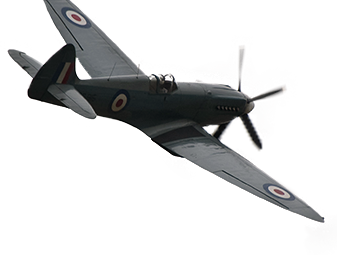
Engine Failure After Take-Off, commonly referred to as EFATO, is one of the most frightening events that can happen to a pilot. A recent incident hit International headlines when US Airways flight 1549 landed in the Hudson after a sudden loss of engine power. Every pilot has been trained to deal with EFATO but the reality of the situation has little in common with the practice runs when you have a competent instructor at your side with his hand on the throttle.
I don’t actually want to have to experience that particular reality but I do want to be as prepared as I possibly can should I have to deal with an engine problem close to the ground. One way of doing this is to read the details of real failures and how the pilots dealt with getting their planes onto the ground.
Manny Peralta, a commercial pilot in Australia, wrote about his experience for AirCentre Australia with useful detail and a summary of lessons learnt. I found it particularly interesting to read about how he ended up fighting his own instincts.
Low Level Engine Failure After Takeoff:
For me, the most frightening thought just after an EFATO, is the overpowering urge to turn back despite the high risk of a stall and spin. It seems that fear and self-preservation, can overcome logical thinking and training. I only just managed to fight off the urge to turn back, by shouting to myself repeatedly over the intercom: “don’t turn back! For a split second, I also remembered a friend, who died when he apparently tried to turn back after an EFATO, from the same runway that I took off from that day. Being a young family man, a fiery death for me was definitely not an option!
The FLYER forums had a recent post about this emergency landing in which the pilot gives an emotional and honest description of writing off a plane and his recollections of the sequence of events.
A recount of my EFATO 4th November 2008:
The noise reverberates through every inch of my body; not a bang as such, but a metallic noise that I can most liken to a flak burst from a world war two movie: the chilling sound of an engine that has just died. Time seems to stop and yet accelerate tremendously all at once. The heavy whine as the engine drops from full power to nothing, the propeller windmilling uselessly in the airflow… No, no, bloody hell no! This cannot be happening! I glance in disbelief at the throttle and mixture levers, which I know that I am both holding fully forward anyway. Sheer terror grips me; my God we’re only at 200ft and we’re going to crash! I feel panic overwhelming me, then: Get a f*cking grip man!!!
This blog post about an EFATO in South Africa is not from the pilot’s perspective but nevertheless it is full of detail of the successful landing of a twin missing an engine.
Soaring: EFATO:
He then spoke to Nationwide who said to him we have an emergency. We have lost hydraulics and partial disintegration of our right engine. The traffic controller said it is not part disintegration. The whole engine is lying on the runway.
This article for dealing with an engine failure is aimed at twins but as a single engine pilot I still found it full of interesting details and important advice.
Pelican’s Perch #4:Engine Failure!:
Many GA pilots are confused over just how to handle an engine failure. What is most important? What to do first? What should the step-by-step procedure be? Every book written that I’ve seen is different, every CFI has her own variation, and when the unfortunate Applicant goes up for the Multi-Engine check ride, the Inspector/Examiner is very likely to say “No, no, no, that’s all wrong, here’s what I want to see,” and the poor Applicant learns yet another way to do it during the check ride. There are variations between instructors and check pilots within the same organizations, and very large differences between different companies, even when operating the same type of equipment.
Even highly-experienced pilots will get into heated arguments over this one. My two favorite ways to start a barfight are to ask “What makes lift?” and “What are the best memory items for an engine failure?” Then I sit back, listen quietly, and leave when it gets bloody. Of course, pilots no longer hang out in bars, so this is much less fun these days.
I also enjoyed reading this argument turned discussion of turning back after an EFATO and why it is so easy to get it wrong.
The Pilot’s Lounge #121: The Big Silence After Takeoff:
The horizon seems higher. The ground is nearer — dramatically so. In a turn, the ground is a powerfully close blur of color that is a stunningly integral part of your peripheral vision: It’s right there, bigger than life and, by gawd, it’s going by fast. That’s something one doesn’t experience in normal flight, even when maneuvering steeply at altitude. Up there, the ground is a more remote, abstract concept and it seems to be moving slowly. Down low, with the ground moving fast, and with the groundspeed increasing while the airplane holds a constant speed near the stall and turns from upwind to downwind, even a pilot with low-altitude experience feels the very powerful sensation of the groundspeed increase and tends to unconsciously pull back on the yoke to keep the speed under control (and, sadly, despite all training, to try to keep from going down). What makes it even worse is that, when the nose must be pushed down hard to accelerate to get speed for the flare, all the pilot sees is a windshield full of ground. It takes a lot of training to accept that visual picture long enough to get enough speed to avoid a stall. When experienced for the first time under the massive stress of an engine failure, it is no surprise that the end is almost preordained even for high-time pilots: a stall, with the future existence of the pilot and passengers telescoped to mere seconds.
This Airbum article includes sensible points about making the decision whether to abort a take-off to avoid that low-level engine failure altogether.
Aborts, Go-Arounds And Other Common Sense:
Unfortunately, there are no hard and fast rules here because every situation is going to be different. However, a couple of concepts do apply. For instance, it’s better to run off the end of the runway with brakes locked and the tires smoking at 20 mph or slide off the end with a curled prop and the gear up than it is to stagger off the end at 100 feet and have the engine quite completely. Yeah, it’s expensive to land and run off the end of the runway but it is almost never fatal. Come down from even 100 feet and chances are, at the very least, you’ll be injured. If you abort and run off the end there will always be the nagging question, “would it have kept running?” If it quits at 100 feet, the question may be “will I ever walk again and did my passengers survive?”
And if that fails, then I’ll be glad if I can remember the points in their article about controlling an unplanned collision with the ground.
Crash Survivability:
Many injuries are the result of getting the airplane too slow while still too far off the ground. The airplane didn’t stall, but the nose was brought up while the airplane was too high and the vertical rate of descent had plenty of time to skyrocket. There is a lot of structure in an airplane to absorb forward impact, but very little that works in the vertical direction.
Rule one in crashing: Fight the urge to pull. Maintain best glide speed until flaring just before impact. Try to make the landing as nearly normal as possible.
And finally, a short clip showing a Tigermoth landing in a field directly after take-off and running into a common field hazard:
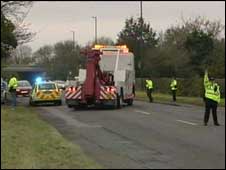
Shortly after takeoff, when at approximately 200 ft above ground level, the engine speed dropped to idle. The pilot lowered the nose of the aircraft to maintain flying speed and turned right to land in a suitable field. The aircraft cleared a sturdy barbed wire fence but, as the aircraft touched down, a cow ran under and struck the left wing. The cow was apparently uninjured. Investigation of the aircraft by a local engineer found corrosion debris in the carburettor
If you enjoy this blog, consider buying my ebook: You Fly Like a Woman for under a dollar at Amazon.

I’ve been tempted to comment on these travel pieces, pointing out that the only “real” way to experience authentic travel is to fly yourself. If you’ve flown commercial, you’ve had a layer of red tape between you and the people who live and work in your destination. Herded from one building to the next without the chance to walking around the plane or seeing the details of the airport, limited by a schedule devised by business men in starched suits who have probably never even made the journey.
I do understand the frustration of watching people close themselves off from the local experience and ask for home delights, telling locals what they think should be there. We have the Irish pub and a fish-and-chip shop and an Indian restaurant and, most recently, kebab to take away. The Andalucians, eager for an income, have always tried to deliver what the tourists expect. In recent years, the tourists themselves have become residents, the ex-pat population swelling and providing for itself. Slowly, my favourite comida casera disappears in favour of fake tapas and international cuisine, my dusky shops are replaced with beach gear and flamenco skirts in toddler sizes.
I’m not usually that bitchy. I do understand the dilemma and usually I’ll offer an alternative: – come with me inland. Lets go to one of the white villages off the coast, in the farming area, and get something to eat and I’ll show you a different Spain. But these authentic restaurants, they may leave something to be desired.
Sometimes it seems that adventurous travellers looking for authenticity are most likely to try to bend local cuisine around their personal dietary requirements. I respect the social decisions that people have made to reduce their impact on the world. And if you have a special diet, your requests will certainly be catered to … but this is not the “real” Andalucia you are tasting, any more than the burger and chips that you sneered at.
An authentic destination is like Schroedinger’s Cat, once you’ve arrived, it probably no longer exists. But it’s not a stage set, pulled down as soon as you have boarded your flight and filed away your passport until next year. They are still there, standing at the market, living their life. It’s not just for show.